
California law has required water heaters to be strapped against earthquakes for years. In your garage, an old, unsecured tank is one of the most likely sources of a sudden flood.
The Appliance Most Likely to Flood Your Home in an Earthquake
Walk into most Rocklin garages and you will find a water heater standing in the corner, a tall metal cylinder holding 40 or 50 gallons of water and connected to gas or electricity. It is easy to ignore. But in an earthquake, an unsecured water heater is one of the most likely things in your home to cause a flood — and California law has required it to be strapped down for decades.
The risk is simple physics. A full water heater is heavy and top-heavy, and ground shaking can tip it over. When it goes, it can tear the water and gas lines connected to it, spilling gallons across the floor and, worse, creating a gas hazard. The water damage alone can be substantial.
This is a code requirement most homeowners have never checked. It is worth the two minutes to find out where you stand.
What California Law Actually Requires
California Health and Safety Code Section 19211 requires that water heaters be braced, anchored, or strapped to resist falling or horizontal displacement during an earthquake. In plain terms, the law says your water heater must be secured so a quake cannot knock it over. The requirement has been part of state law for years and applies broadly to residential water heaters.
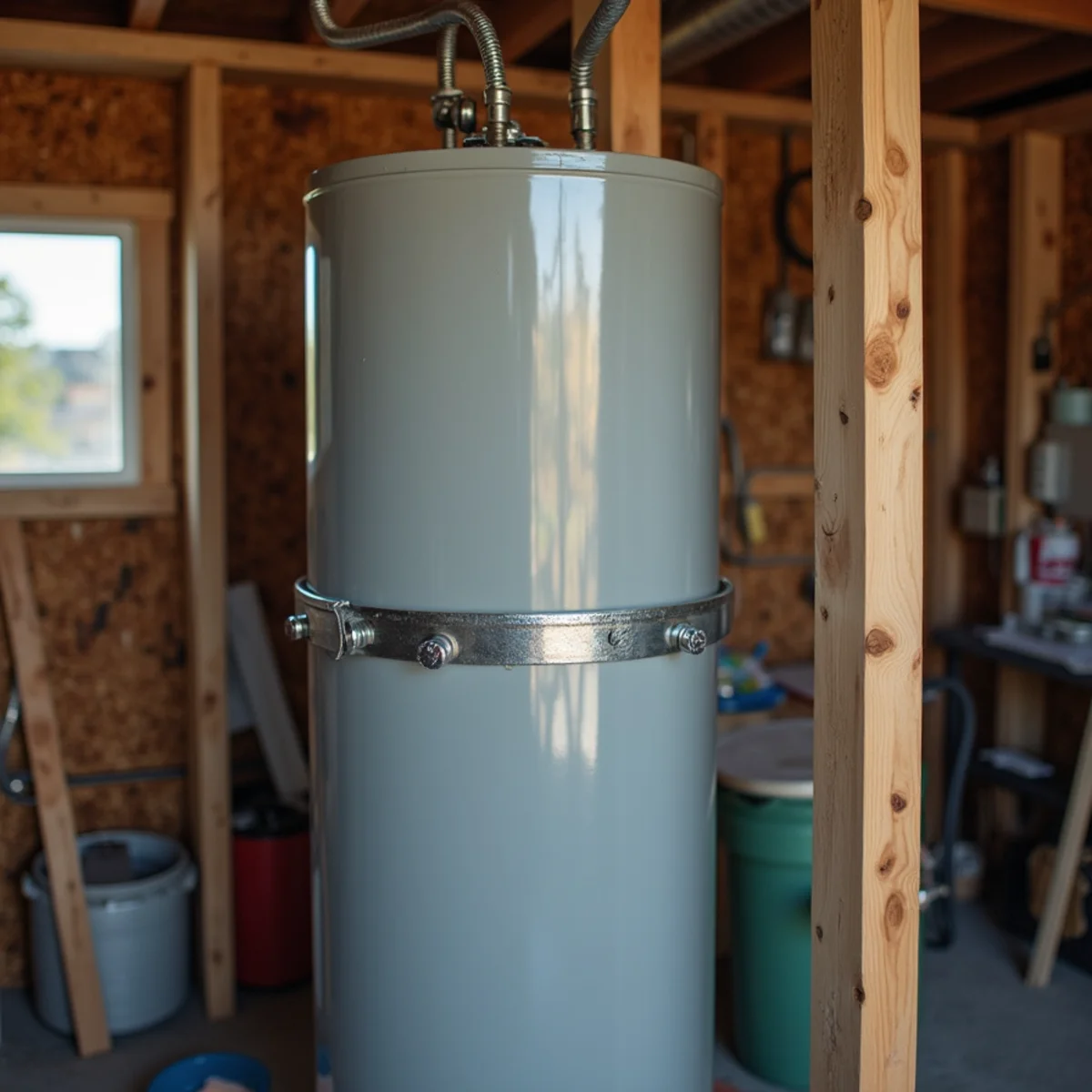
The standard approach is two metal straps — one around the upper third of the tank and one around the lower third — anchored into the wall studs. Section 19211 also ties into the sale and permitting process: securing the water heater is commonly required when a home is sold or when a heater is replaced under permit.
The law exists because California is earthquake country, and a water heater is both heavy and plumbed directly into your home's water and gas supply. Securing it is cheap. The damage from not securing it is not.
Why an Unstrapped Water Heater Is a Leak Waiting to Happen
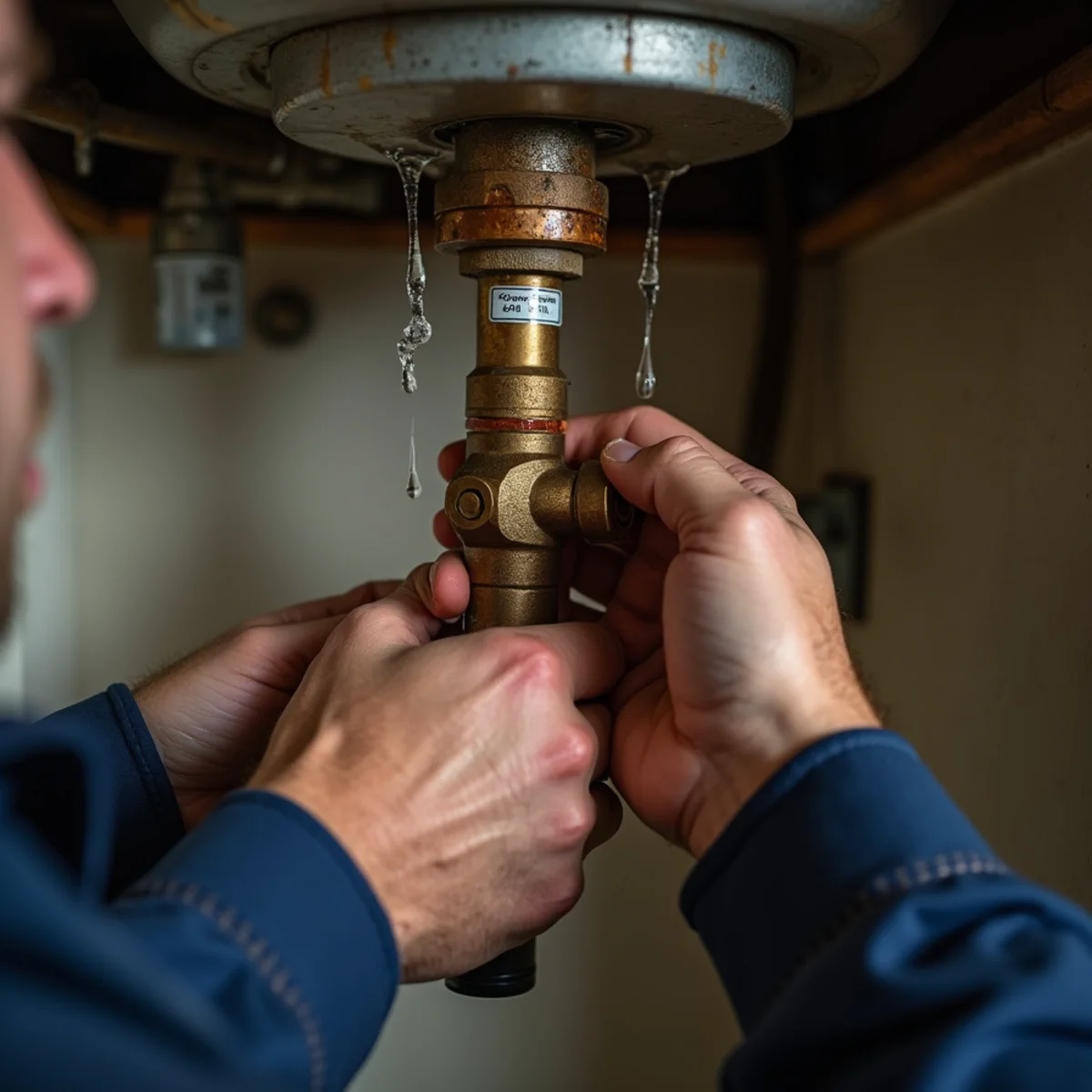
An unsecured water heater sitting on the garage floor has nothing holding it in place but its own weight and the pipes attached to the top. During an earthquake, that is not enough. The tank can slide or topple, and when it moves, the rigid copper or steel supply lines and the gas connection are the first things to break.
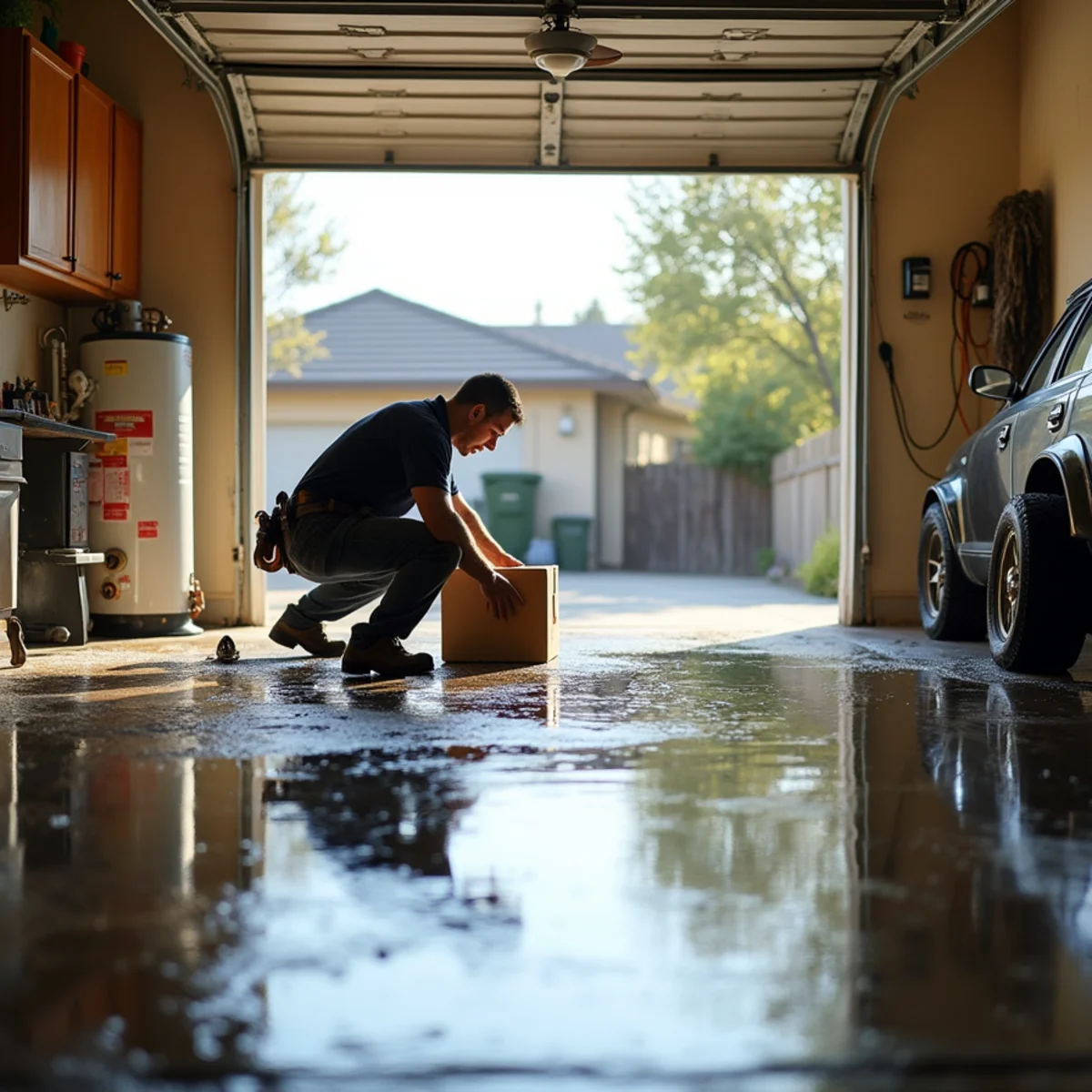
A broken supply line on a toppled heater releases the tank's full contents and then keeps flowing from the house supply until someone shuts the main. That can mean dozens or hundreds of gallons across a garage and into adjoining rooms. If the gas line ruptures too, the leak becomes a fire and explosion risk on top of the water damage.
Even without an earthquake, an old or poorly installed heater can fail and flood a garage. Strapping addresses the seismic risk specifically, but it is part of a broader truth: the water heater is one of the most common sources of sudden water loss in a home.
Rocklin's Aging Water Heaters
Water heaters have a typical service life of about 8 to 12 years. Rocklin's large stock of 1990s and 2000s tract homes means a lot of these appliances are on their second or third unit — and plenty are overdue for replacement. An aging heater is more likely to leak or fail outright, and if it was installed years ago, its strapping may be missing, loose, or never done to code.
Our hard Sacramento Valley water does not help. Mineral scale builds up inside the tank, accelerating corrosion and shortening the heater's life. A tank that has been quietly scaling for a decade is closer to failure than its age alone suggests.
Put those together — an old, scale-worn tank that may not be properly strapped — and the garage water heater becomes one of the more predictable water risks in a Rocklin home.
How to Check and What to Do
There is a reason the water heater tops so many lists of home earthquake hazards. It is heavy, it is full of water, and it is connected to both a gas line and a supply line, yet in most homes it stands unsecured on a garage floor. That combination makes it uniquely capable of causing both a flood and a fire from a single fall. The good news is that it is also one of the easiest hazards to check and fix — you can assess yours in the time it takes to read this list:
Checking your water heater takes a few minutes and no tools:
- Look for two metal straps securing the tank to the wall studs, one upper and one lower
- Make sure the straps are tight and anchored into framing, not just drywall
- Check the age on the unit's label — over 10 years means it is near the end of its life
- Look for rust, moisture, or mineral crust around the base and fittings
- Confirm the flexible connectors on the water and gas lines are in good condition
Beyond Strapping: Pans, Sensors, and Flexible Connectors
Strapping solves the earthquake-topple problem, but most water heaters do not fail in an earthquake, they fail from age, corrosion, and a rusted-through tank. A few inexpensive additions catch those slow failures the way straps catch the sudden one. A drip pan under the tank, plumbed to a drain, carries away the seepage that precedes many tank failures instead of letting it spread across the garage floor. Flexible, corrugated water and gas connectors flex with movement rather than snapping the way rigid pipe can.
A battery or Wi-Fi water leak sensor set beside the heater is the cheapest insurance of all, since it alarms the moment the pan gets wet, often days before you would have noticed on your own. For homes on Rocklin's hard water, where scale shortens tank life, that early warning turns a flooded garage into a quick, dry swap. None of these replace strapping to meet Section 19211; they close the gap it leaves for the failures that have nothing to do with shaking.
Water Heater Failure in West Rocklin? We Are Close By
If your heater is unstrapped, a plumber can bring it up to the Section 19211 standard quickly and inexpensively. And if a water heater does let go — from a quake, age, or a failed fitting — call us fast. Water heater leak cleanup is one of the most common jobs we run, and the sooner we extract and dry, the less the tank's contents cost you.
The water heater in your West Rocklin garage is quiet until the day it is not. Strap it to meet California law, replace it when it ages out, and know who to call when it fails. Our crews handle water heater leak cleanup across West Rocklin and the whole city. Call (201) 277-9344 any time.
Need help right now in Rocklin? Our line is open 24/7.
(201) 277-9344Frequently asked
Yes. California Health and Safety Code Section 19211 requires water heaters to be braced or strapped against earthquakes. It is commonly enforced at sale and when a heater is replaced under permit.
The standard is two: one around the upper third of the tank and one around the lower third, both anchored into wall studs. This keeps the tank from toppling and tearing its water and gas lines in a quake.
Shut off the water supply to the tank, keep clear if you smell gas, and call for cleanup fast. Call (201) 277-9344 for water heater leak cleanup — we extract and dry before it spreads.
Typically 8 to 12 years, and Sacramento Valley hard water can push a tank toward the low end by building scale that accelerates corrosion. If yours is past ten years, plan its replacement before it fails. A tank that goes at the wrong moment can flood a garage in minutes.
Often yes. Water seeping from the base of the tank usually means internal corrosion, and a slow weep can become a sudden rupture. Shut off the water supply to the tank, and if you smell gas keep clear and call for help. Call (201) 277-9344 for water heater leak cleanup.
Related help from our team
Restoration Rocklin CA
IICRC-Certified Water Damage Restoration Team
We're a locally based, IICRC-certified water damage restoration team serving Rocklin and Placer County 24/7. Questions about your situation? Call (201) 277-9344.