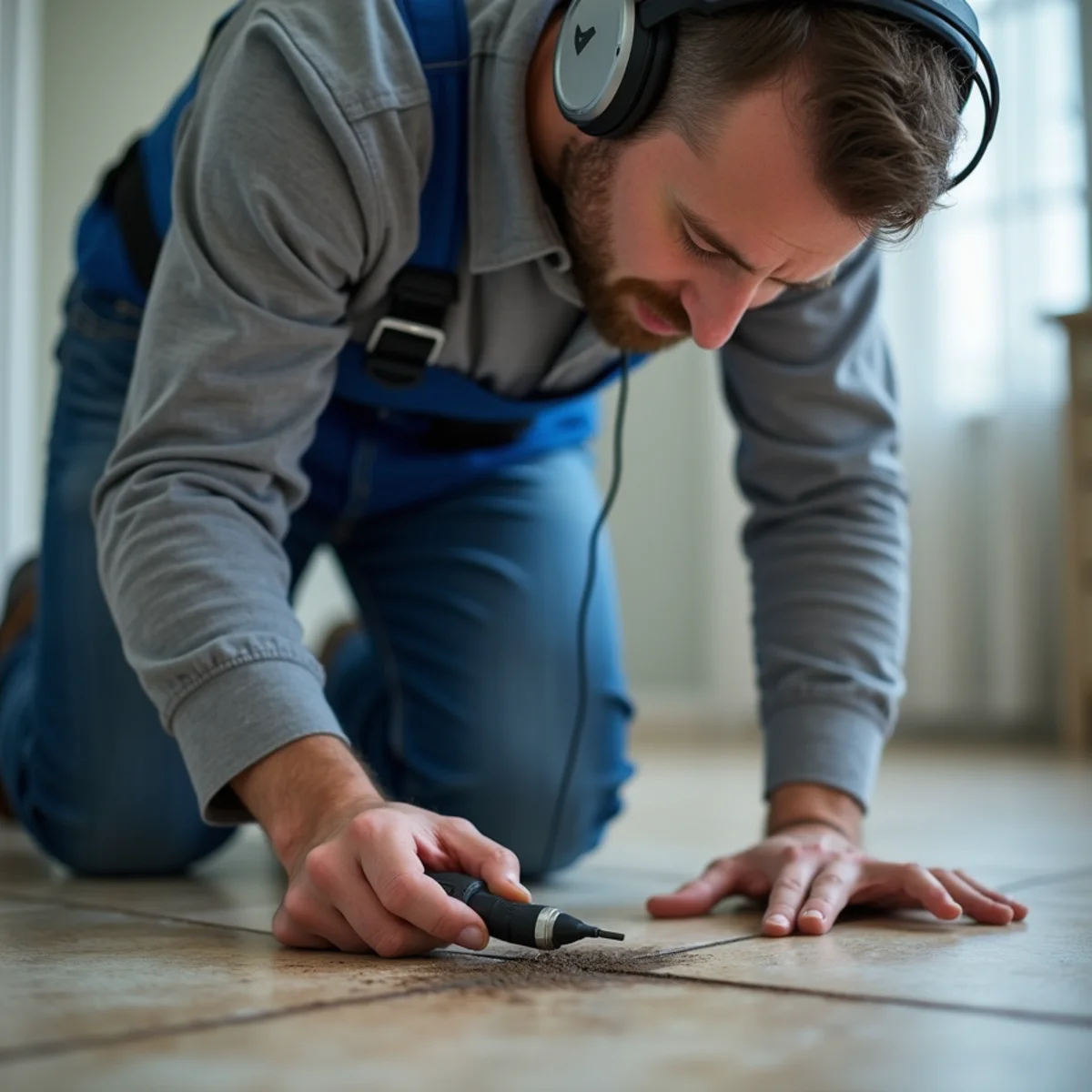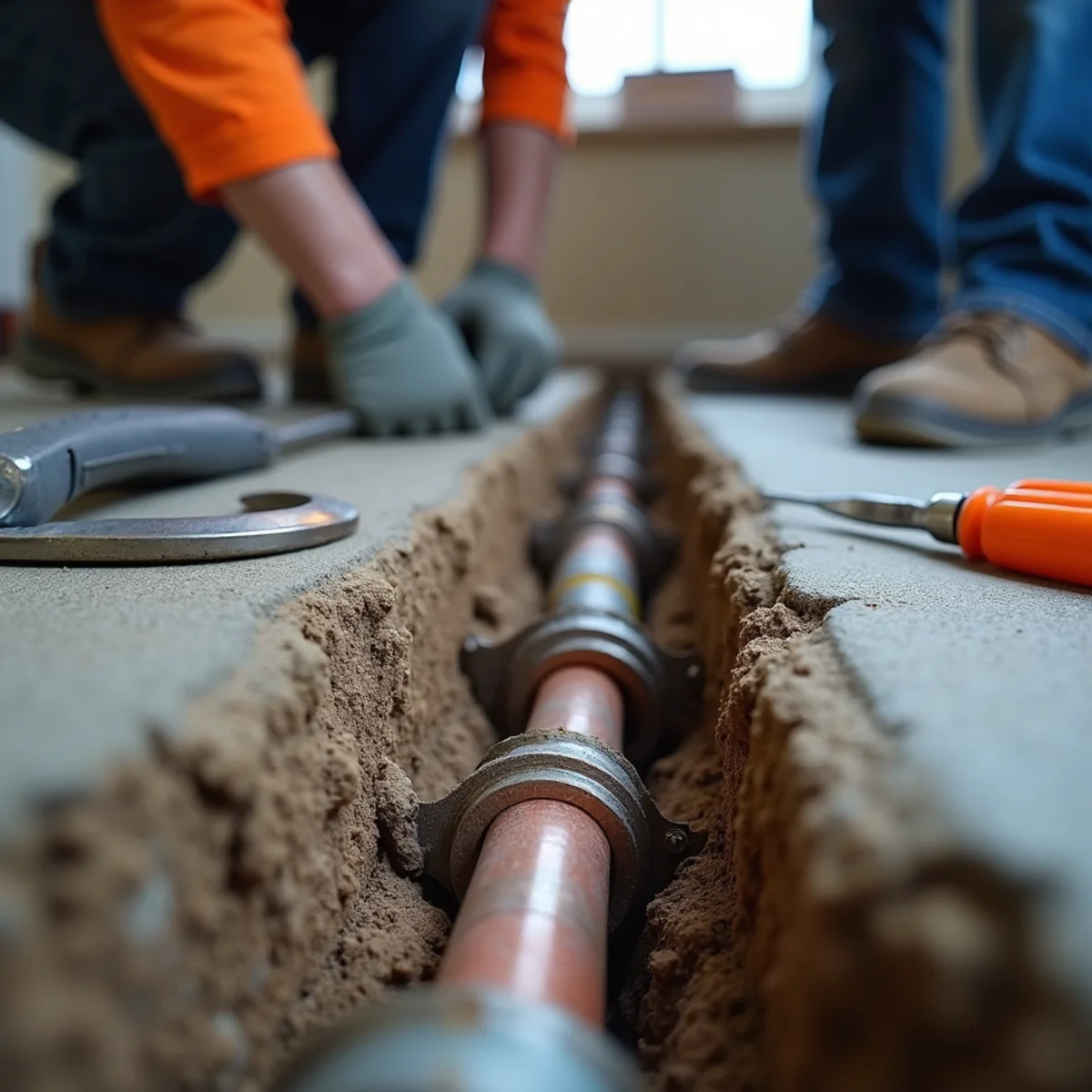

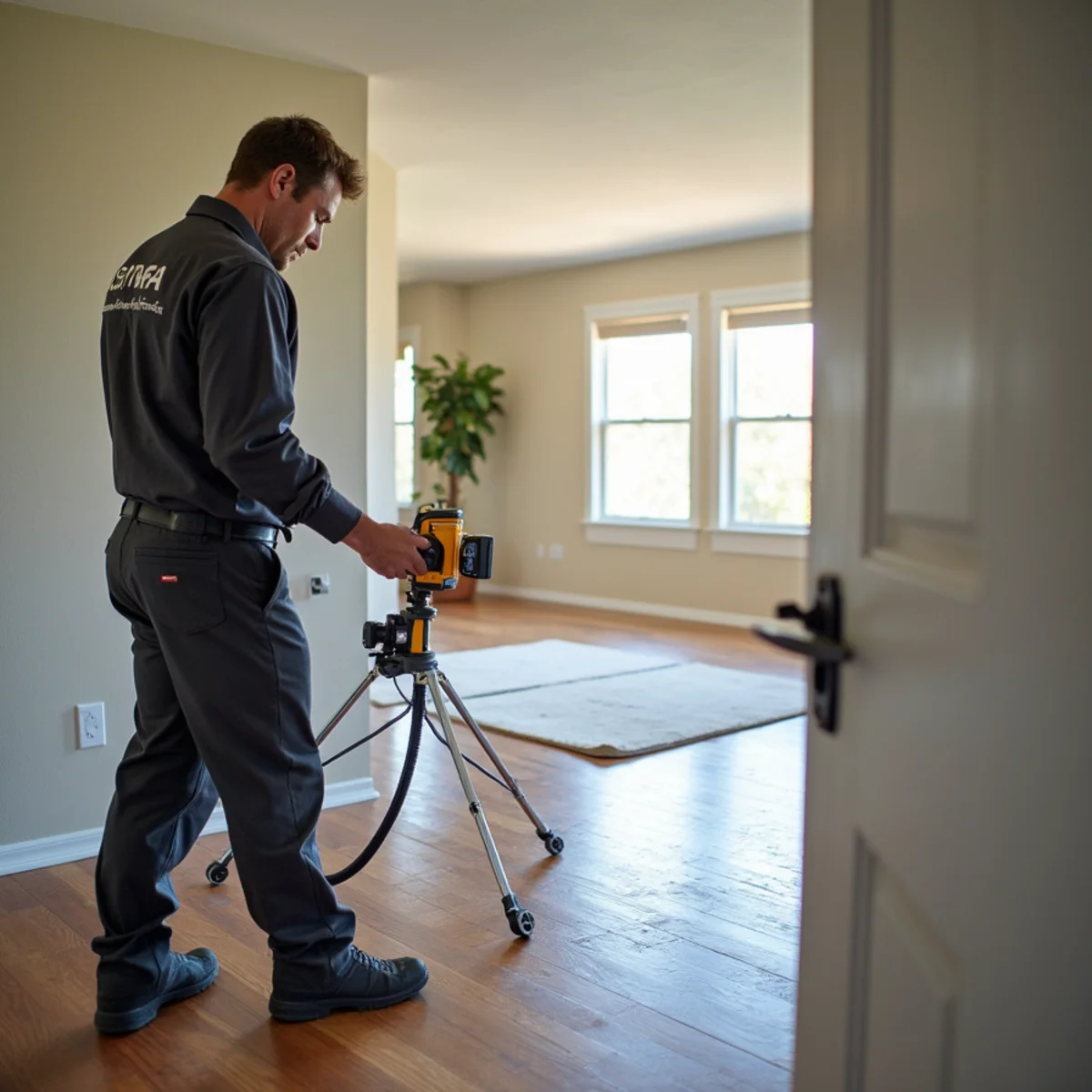
A slab leak is a pipe failing under the concrete foundation your house sits on, and it is one of the sneakiest losses we deal with. The water has nowhere obvious to go, so it saturates the soil under the slab, seeps up through flooring, and wicks into the base of your walls — often for weeks before you notice a warm spot on the floor or an unexplained spike in your water bill.
We handle the water damage side of a slab leak from detection to finished restoration: pinpointing the leak so the plumbing repair is targeted, then drying the flooring, slab, and framing the leak soaked. Because slab leaks run hidden, the sooner we start, the less of your home comes apart. Call (201) 277-9344 for fast local service.
Signs of a slab leak
- A warm or hot spot on the floor, often on tile or vinyl
- The sound of running water when every fixture is turned off
- A water bill that climbed with no change in how you use water
- Damp, buckling, or discolored flooring with no leak above it
- A musty smell or mildew at the base of walls near the floor
- Low water pressure or new cracks in flooring or the foundation
What our slab leak water damage restoration service includes
- The active leak confirmed at the meter before any work begins
- Acoustic listening and thermal imaging to pinpoint the leak under the slab
- The leak marked precisely so the plumber opens one spot, not the whole floor
- The plumbing repair, reroute, or repipe coordinated for you
- Specialized slab drying to pull moisture from the concrete and flooring
- The concrete and wall bases monitored until they reach dry standard
- Mold checked and treated at the base of walls where the leak ran hidden
- Flooring and baseboards restored and documented for your insurance
Need help right now in Rocklin? Our line is open 24/7.
(201) 277-9344Why slab leaks are common in Rocklin homes
Most Rocklin homes are slab-on-grade — built directly on a concrete pad with the copper water lines running through or beneath it. Those lines were installed during the 1980s, 1990s, and 2000s building booms, and they are now old enough to fail. The hot-water line is usually first, because heat and constant use wear it fastest, which is why a warm floor spot is such a classic slab-leak tell.
Rocklin's hard water accelerates all of it. Mineral-heavy water corrodes copper from the inside out until a pinhole opens, and a pipe encased in concrete under the slab is under constant stress from the granite-and-clay soil expanding and contracting with the seasons. A slab leak can run a long time before it surfaces, which is exactly why these losses tend to be larger by the time anyone catches them.
Finding it without tearing up the whole floor
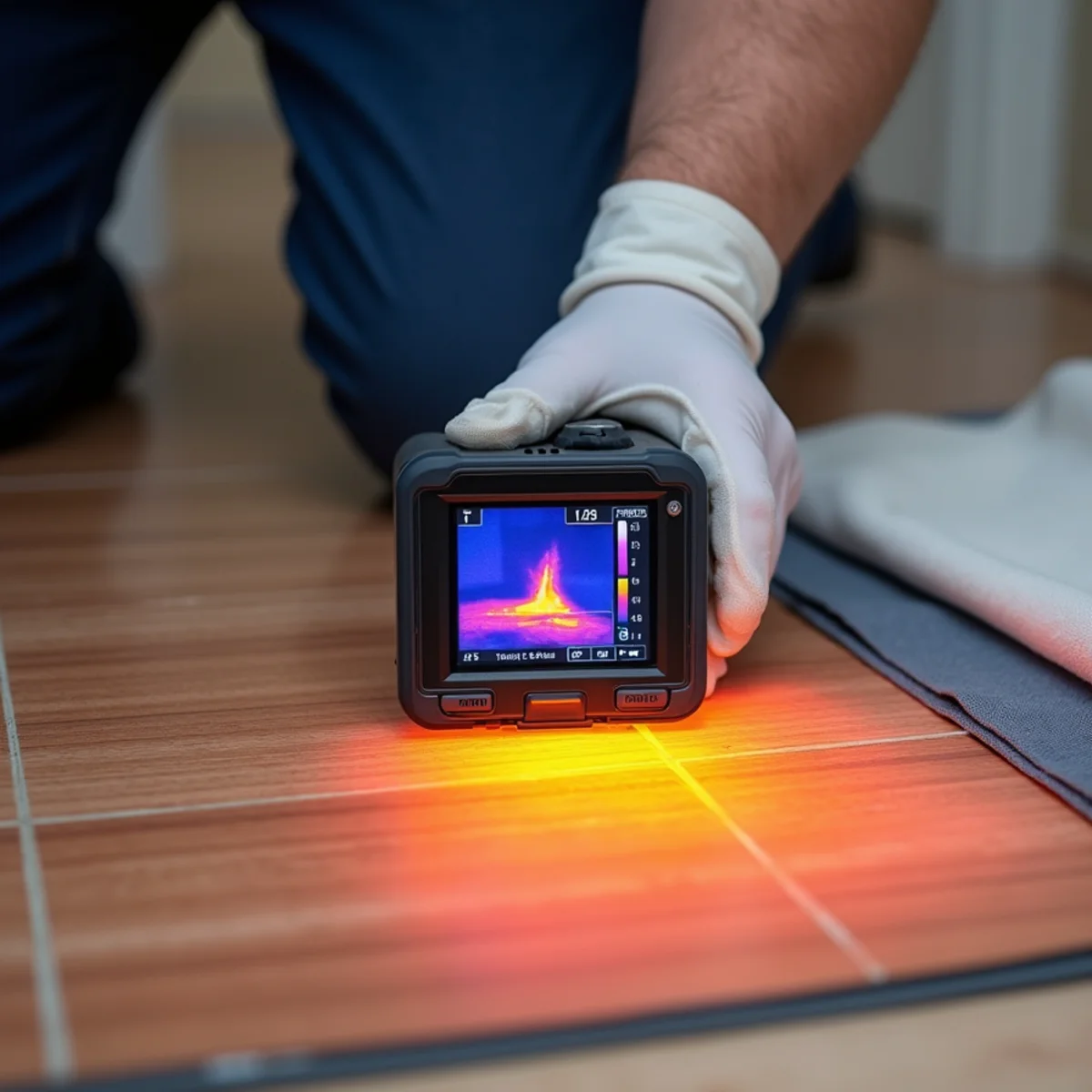
The old way to chase a slab leak was to guess and jackhammer. We do not. Acoustic listening equipment picks up the sound of water escaping under the concrete, and thermal imaging reveals the heat signature of a hot-water line leaking beneath the floor. Between the two, plus moisture mapping across the slab, we can mark the leak's location closely before a single tile comes up.
Precise location means the plumber opens one targeted spot instead of exploring, and it means we dry only what is actually wet. It is the difference between a contained repair and taking apart half your flooring. Once the leak is pinpointed, the plumbing repair — a spot fix, a reroute, or in some cases a repipe — can be made efficiently, and we take over the drying and restoration.
Drying a slab and restoring what the leak ruined
Slab leaks are stubborn to dry because the water is under the concrete and in the flooring bonded to it. We use specialized drying methods to pull moisture up out of the slab and the affected flooring, and we monitor the concrete and the base of the surrounding walls until they reach dry standard. Rushing this step is how mold ends up under a brand-new floor.
Then we restore. That can mean re-laying or replacing flooring the leak damaged, repairing wall bases and baseboards that wicked water, and treating any mold that formed while the leak ran undetected. We document the whole loss for your insurance, because slab leaks have their own coverage quirks worth getting right the first time.
Our slab leak restoration process
- 1
Confirm & locate the leak
We verify an active slab leak at the meter, then use acoustic listening, thermal imaging, and moisture mapping to pinpoint it under the concrete without exploratory demolition.
- 2
Coordinate the plumbing repair
With the leak marked precisely, we coordinate a targeted repair, reroute, or repipe so the fix is efficient and access to the slab is minimized.
- 3
Dry the slab & structure
We use specialized drying to pull moisture from the concrete and affected flooring, monitoring the slab and wall bases until they reach dry standard.
- 4
Treat for mold
Because slab leaks often run hidden for weeks, we check for and treat any mold that developed at the base of walls and under flooring.
- 5
Restore flooring & walls
We re-lay or replace damaged flooring, repair baseboards and wall bases, and document everything for your insurance claim.
What affects slab leak restoration cost
The plumbing repair and the water damage restoration are two separate parts of the bill, and either can dominate depending on how long the leak ran. Overall water damage restoration averages around $3,850 nationally in 2026, but slab work has its own variables:
- How long the leak ran before it was found
- How much flooring and slab area got wet, and the flooring type
- Whether the repair is a spot fix, a reroute, or a full repipe
- How difficult the leak is to access under the slab
- Specialized slab-drying time required to reach dry standard
- Mold treatment if the leak ran undetected for weeks
Why choose Restoration Rocklin CA for slab leak water damage restoration
A slab leak hides under the concrete your house sits on, so the longer it runs the more of your home comes apart. We locate it without jackhammering — acoustic listening and thermal imaging pinpoint the leak so the plumbing repair is targeted — then dry the slab and flooring and restore what the water ruined. A local Rocklin crew that finds it precisely and keeps the job small.
- We pinpoint the leak with acoustic listening and thermal imaging, so the plumber opens one spot instead of exploring your floor.
- A live line answers 24/7 and a local crew reaches you within 60 minutes to confirm the leak at the meter.
- IICRC-certified, licensed, and insured, we use specialized slab drying and verify the concrete and wall bases before we stop.
- We document the loss and bill your insurance directly, including the tear-out and access coverage many slab claims carry.
- Locally owned in Rocklin, we know why the hard water and slab-on-grade copper here fail and catch mold from a leak that ran hidden.
Slab Leak Water Damage Restoration across Rocklin & Placer County
We provide slab leak water damage restoration to homes and businesses throughout Rocklin — across ZIP codes 95765 and 95677 — and the surrounding Placer and Sacramento County communities, usually within 60 minutes of your call. Wherever you are in the area, a local crew and the right equipment are close by.
Slab Leak Water Damage Restoration — questions & answers
The classic signs are a warm spot on the floor, the sound of running water with everything off, a water bill that jumped for no reason, and damp or buckling flooring with no leak above it. If you notice any of these, call (201) 277-9344 and we will confirm it at the meter and locate it before it does more damage.
No. We locate slab leaks non-invasively with acoustic listening equipment and thermal imaging, which lets us mark the spot closely before anything is opened. That means a targeted repair in one place instead of tearing up the floor to hunt for it, and it keeps the whole job smaller.
Many homeowners policies cover the water damage a slab leak causes and the cost to access the pipe — sometimes called tear-out and access coverage — even when the pipe repair itself is not covered. Coverage varies, so we document the loss carefully and help you understand what your policy includes before work begins.
Often weeks or months, because the water escapes under the concrete with nowhere obvious to go — it saturates the soil and wicks up into flooring and wall bases before a warm spot or a bill spike gives it away. That hidden runtime is why these losses tend to be larger. Call (201) 277-9344 the moment you suspect one and we will confirm it fast.
Yes. Because a slab leak usually runs undetected, moisture sits at the base of walls and under flooring long enough for mold to establish. We check for it as part of the restoration, treat what we find, and dry the slab and structure to standard so it does not keep growing after the pipe is fixed.