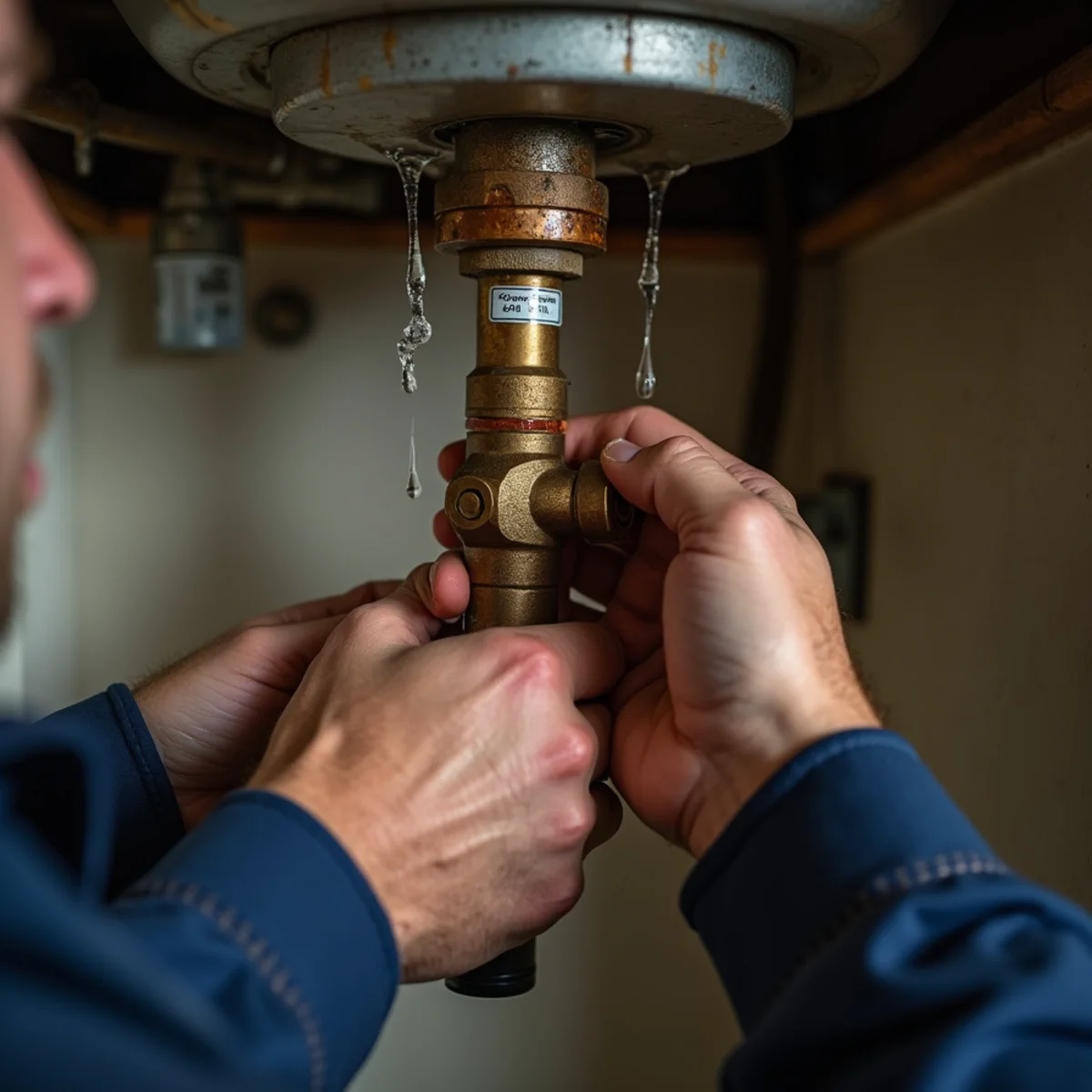

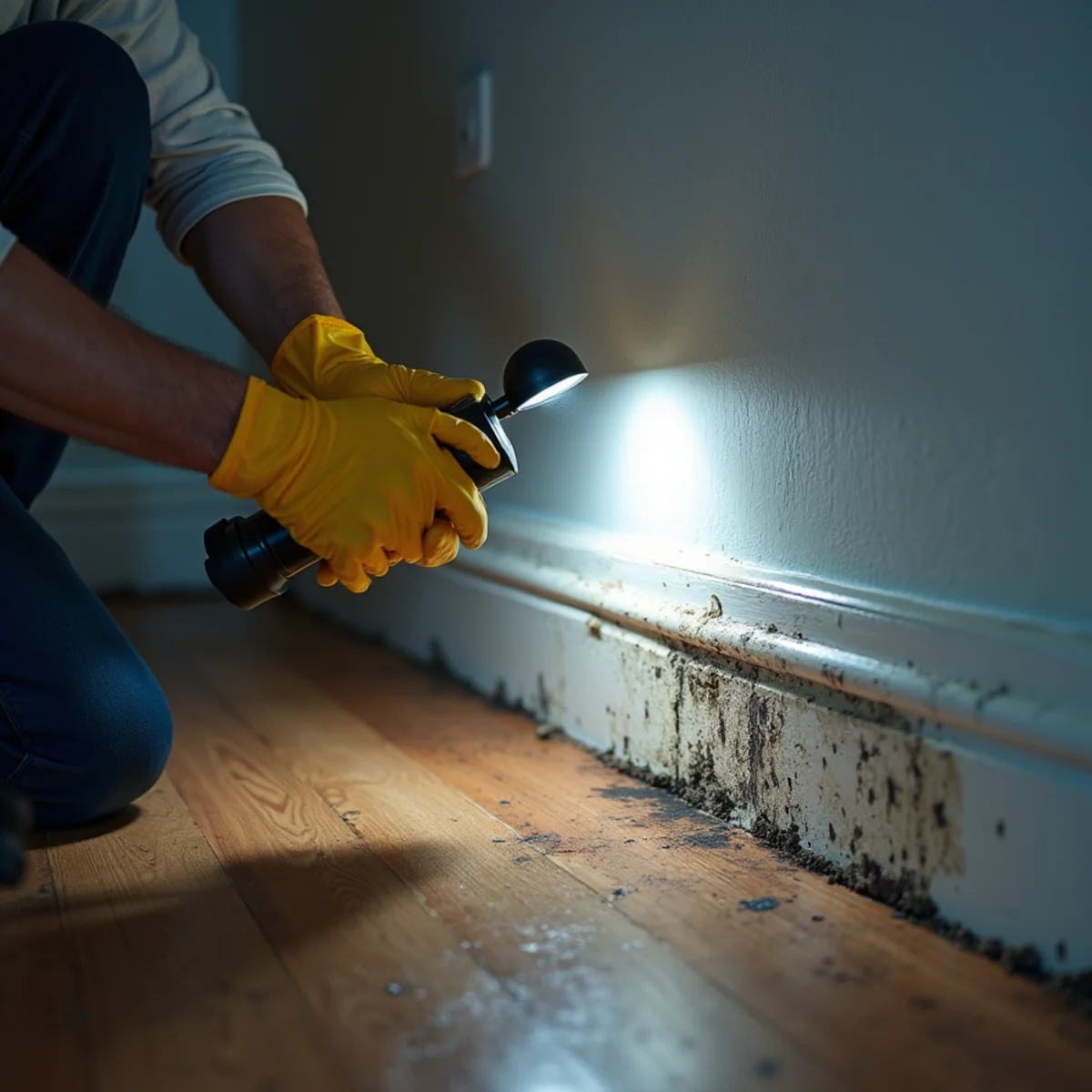
The surface dried, but the smell stayed. A lingering musty odor is not cosmetic. It is the signal that moisture and microbial growth are still active somewhere you have not looked.
A Musty Smell Means Moisture Is Still There
The floor feels dry. The stain stopped spreading. And yet the room still smells like a damp basement. That smell is not leftover from the leak. It is a live signal that moisture is still present somewhere, feeding something.
Musty odor is produced by microbial growth, and microbial growth needs moisture. If you can smell it, the conditions are still active. Air freshener will mask it for an afternoon and change nothing about the cause.
The mistake is treating the smell as a nuisance instead of a symptom. It is telling you the drying job stopped at the surface and left water behind where you cannot see it.
Where the Smell Comes From
That distinctive musty smell comes from compounds released by mold and bacteria as they grow on damp material. The technical name is microbial volatile organic compounds. The plain version is that living growth gives off odor, and the odor tracks the moisture.
This is why the smell often gets stronger in an enclosed space, a closet, or a room that has been shut up. The compounds concentrate where air does not move. Open the door after a weekend away and the smell hits you at once.
It also means the smell is not random. It is coming from a specific wet spot. Find the moisture and you find the source of the odor. The intensity is a rough guide to how much is left. A faint smell that only shows up in a closed room points to a small hidden pocket, while a strong smell you notice the moment you walk in usually means a larger wet area or growth that has had time to spread.
Why Surface Drying Misses It
Fans and a few dry days handle what you can touch. They do not reach the water that soaked into places air cannot get to. That is the gap where the smell lives.
Water wicks into wall cavities, under subfloor, into the paper backing of drywall, and deep into insulation. Household airflow never reaches those pockets, so they stay damp for weeks while the surface reads dry. A dehumidifier that captures moisture from the air is what actually pulls those areas down to a safe level.
This is precisely what our structural drying and dehumidification process is designed to solve. We find the trapped moisture with meters and thermal imaging, then dry it to standard so there is nothing left to feed the smell. Thermal imaging helps because damp material holds temperature differently than dry material, so a cool patch on a wall that looks perfectly normal often marks exactly where the water is hiding.
Common Hiding Spots in Rocklin Homes
Moisture is predictable once you know where to look. In the homes we service across Rocklin and Placer County, the same spots come up again and again after a leak that was only surface-dried.
In neighborhoods like Fair Oaks with a range of home ages, older wall assemblies and additions create extra cavities and seams where water lingers. We check these areas first because that is where the smell almost always traces back to.
- Inside wall cavities behind baseboards, where water wicked up from the floor
- Under and behind kitchen and bathroom cabinets
- Beneath the subfloor, especially under carpet and vinyl
- In wet insulation that never fully dried
- Around window and door frames where water tracked sideways
- Under the pad of a carpet that was vacuumed but not extracted
What Actually Fixes It
Killing the smell means removing what is producing it, and that is a three-part job. First, locate the trapped moisture with the right tools instead of guessing. Second, dry those hidden areas to standard, which sometimes means opening a small section of wall or a cabinet kick to reach the cavity and move dry air through it. Third, remove any material that has already grown mold, because you cannot deodorize your way past active growth.
Once the moisture is gone and any affected material is removed, the smell goes with it. There is no odor to mask because there is nothing left generating it. That is the difference between covering a problem and solving it. A fogger or an ozone treatment on its own does neither, because it leaves the wet material in place to start the cycle over again.
When the Smell Is Coming From Your HVAC
Sometimes the musty smell is not in a wall at all, it is riding through your ductwork. An air conditioner pulls warm, humid air across a cold evaporator coil, and that coil and its drain pan stay damp all cooling season. If the pan clogs or the coil grows a biofilm, every cycle blows that odor through the whole house, which is why it can seem to come from everywhere at once instead of one room.
In Rocklin's long cooling season, this is common. The return side matters too. If a water loss soaked material near a return vent, the system pulls that odor in and spreads it. So when the smell tracks the air handler switching on and off, we check the coil, the condensate drain line, and any ductwork that runs through a wall or space that got wet, rather than chasing a room that is already dry.
Get Rid of the Smell at Its Source
A musty smell is the easiest water-damage symptom to ignore and one of the most reliable. If your home still smells damp after a leak was supposedly handled, the water is still there, and so is whatever is growing on it.
We find the hidden moisture, dry it to standard, and remove any material that has already started to grow. Call (201) 277-9344 and we will get rid of the smell by getting rid of its cause, not by covering it up.
Need help right now in Rocklin? Our line is open 24/7.
(201) 277-9344Frequently asked
Because the surface dried but moisture is still trapped in wall cavities, subfloor, or insulation, and microbial growth there is producing the odor. The smell is a signal that hidden moisture remains. Locating and drying it to standard, and removing any moldy material, is what removes the smell.
No. Those mask the odor temporarily but do nothing about the moisture and growth causing it. The smell returns because the source is still active. The only lasting fix is finding the hidden moisture, drying it, and removing affected material.
Often, yes. That musty odor is produced by mold and bacteria as they grow, so a persistent smell usually means growth is underway somewhere damp. It is worth an inspection before it spreads. Call (201) 277-9344 and we will find the source.
Because the system is likely picking up and distributing the odor. A damp evaporator coil, a clogged condensate drain, or ductwork that ran through a wet area all feed a smell that spreads every time the air handler cycles. When the odor tracks the system, the HVAC is worth checking alongside the walls and floors.
Yes, and when it does it means moisture is still present or a new source has appeared. A slow leak that was never found, a fresh drip, or an area that was surface-dried but not dried to standard will all bring the odor back. That is a signal to look again, not to reach for more air freshener. Call (201) 277-9344 and we will trace it.
Related help from our team
Restoration Rocklin CA
IICRC-Certified Water Damage Restoration Team
We're a locally based, IICRC-certified water damage restoration team serving Rocklin and Placer County 24/7. Questions about your situation? Call (201) 277-9344.