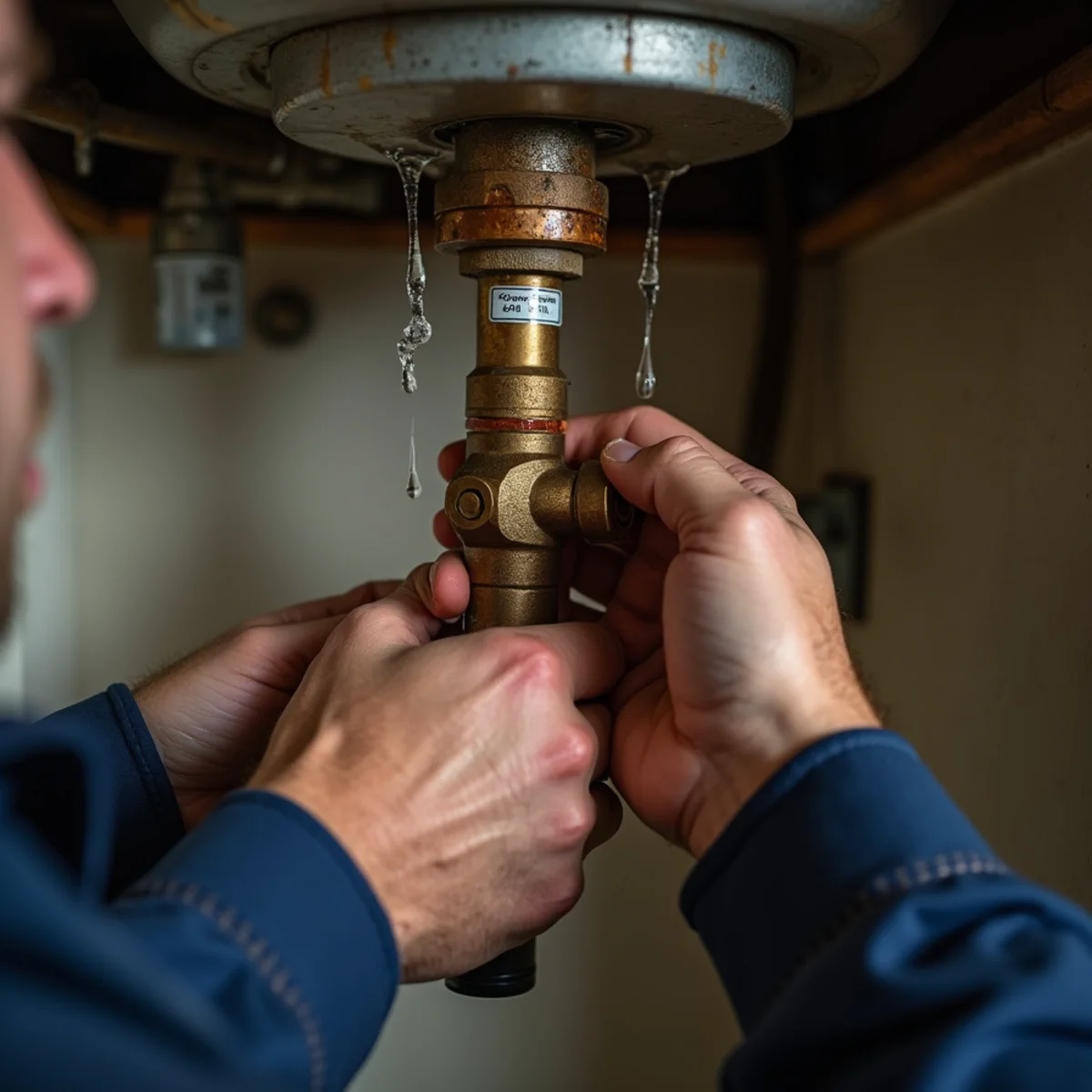

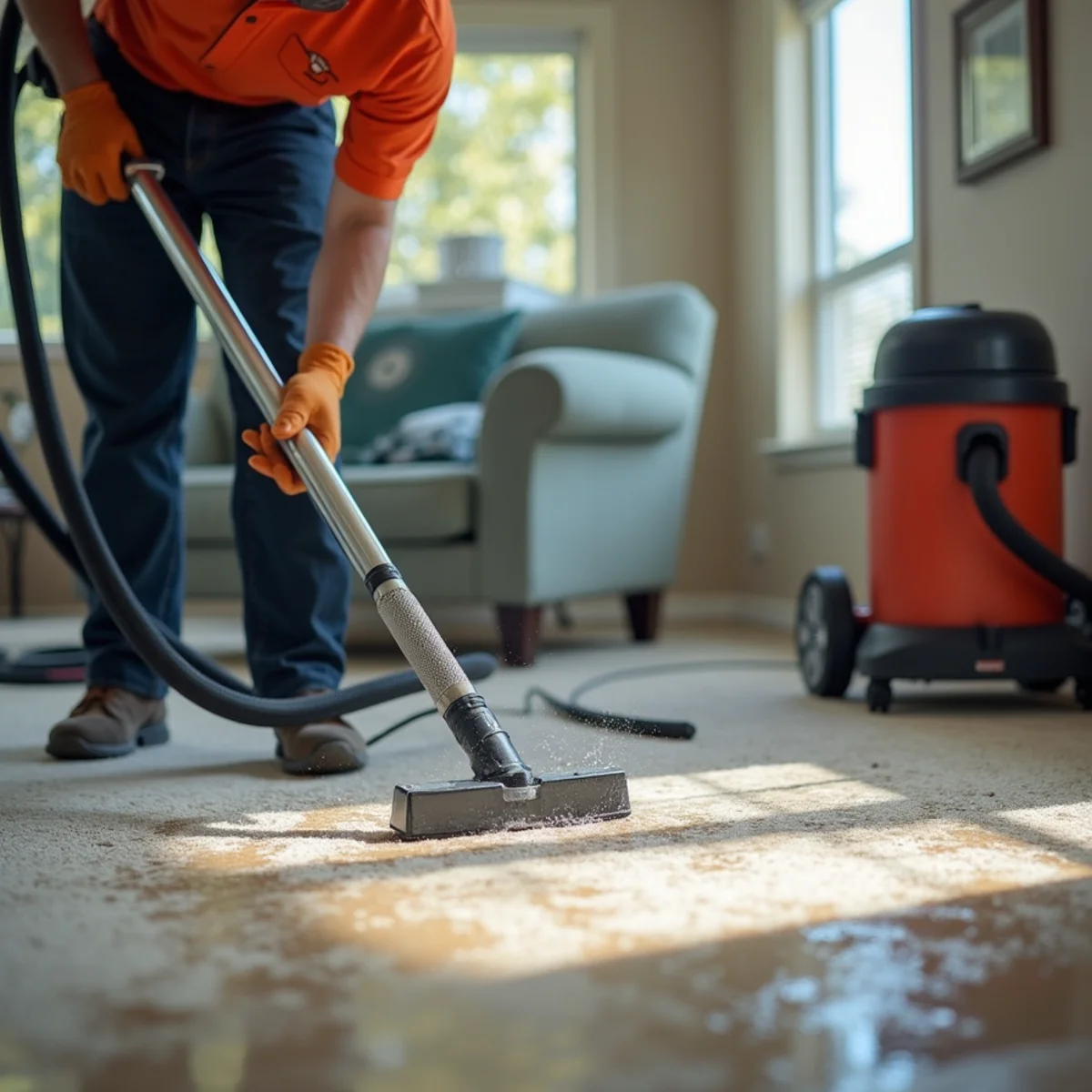
A wet/dry vac skims the surface and leaves the pad and subfloor soaked. Here is what professional water extraction actually removes, and why it decides whether your carpet survives.
The Shop Vac Buys You Time, Not a Dry Floor
You caught the leak, you grabbed the shop vac, and you filled the tank three times. The carpet still squishes. That is not a failure of effort. It is the difference between removing surface water and removing the water that has already soaked into the layers underneath.
A flooded carpet is not one thing. It is a system: face fibers on top, a foam or rubber pad below, and subfloor beneath that. Water passes through all three within minutes. A wet/dry vac reaches the top and a little of the middle. It leaves most of the water where you cannot see it.
That hidden water is what causes the real damage. It feeds mold, warps the subfloor, and wicks up the base of your walls. Getting it out fast is the whole job, and it takes more than a garage vacuum.
What a Wet/Dry Vac Actually Reaches
A household wet/dry vac moves a few gallons before it needs emptying, and it pulls with light suction across a small nozzle. On a hard floor, that can be enough. On carpet, it is not.
The problem is the pad. Carpet padding is designed to absorb impact, which means it also absorbs water and holds onto it. A shop vac cannot draw that water back up through the carpet. You can run it until the fibers feel damp instead of wet, but the pad below is still saturated and the subfloor is still taking on moisture.
By the time the surface feels dry to the touch, the water underneath has had hours to spread. That is the gap professional extraction is built to close.
Where the Water Really Goes
Water follows gravity and then it follows the path of least resistance. From a carpeted room, it travels down into the pad and subfloor, then sideways under the baseboards and into the wall cavity. It also tracks along seams and under thresholds into the next room.
This is why a leak that looked like it stayed in one bedroom shows up as a stain in the hallway ceiling below, or as swollen baseboards two rooms away. The water you can see is a fraction of the water that moved.
Professional extraction targets that spread. We use moisture meters and thermal imaging to find where the water traveled, then extract from those areas before it can sit and cause secondary damage. The parts of the room that look untouched are often the ones that need attention most, because water pools where you are not looking. Catching that spread early is what keeps one wet room from becoming three.
What Professional Extraction Pulls Out
Truck-mounted and portable extraction units do two things a shop vac cannot. They move hundreds of gallons per hour, and they use weighted extraction tools that press down through the carpet to draw water up out of the pad and subfloor, not just off the surface.
That is the mechanical difference that saves flooring. When we finish, we verify with moisture readings that the water is actually out of the structure, not just off the parts you can touch. Our water extraction crews treat that verification as part of the job, not an extra.
- Standing water at high volume, so the room is not sitting wet for hours
- Water trapped in the carpet pad, which a shop vac cannot reach
- Moisture in the subfloor before it can warp or delaminate
- Water that wicked under baseboards and into wall bases
- Enough total moisture that drying equipment can finish the job in days, not weeks
The Carpet Is Often Savable — the Pad Usually Isn't
Homeowners assume a flooded carpet is a total loss. It often is not. If the water was clean and we reach it fast, the carpet itself can usually be extracted, cleaned, and re-laid. That is a real cost saving.
The pad is a different story. It holds too much water to dry in place reliably, so it is usually removed and replaced. That is standard practice, not overkill. We have seen this play out in homes across Rocklin, including two-story houses in Woodbridge where an upstairs supply line dumped water through the pad before anyone noticed.
The variable that decides the outcome is time. Clean water and a fast response mean a savable carpet. Water that sat for a day, or water that was contaminated, changes the math. That is why the first call matters more than the first mop.
One Mistake That Makes It Worse: What Sits on the Wet Carpet
While you wait for a crew, what stays on the soaked carpet matters more than people realize. Wood furniture legs bleed stain into wet fibers, metal legs leave rust rings, and a colored rug or its jute backing transfers dye, and all three set permanently within hours. Cardboard boxes wick water upward and collapse into the pile.
Foot traffic is the other quiet mistake. Walking across saturated carpet pushes water deeper into the pad and subfloor and grinds any contaminants further in. There is a reason pros block furniture up on foam or foil tabs and keep everyone off the area. In Rocklin's many two-story homes, we also check the ceiling in the room below right away, because water sitting in an upstairs pad drips through the drywall fast.
- Lift furniture legs onto foam blocks or foil, or move pieces off the carpet entirely
- Pull up area rugs so their backing does not stain the carpet underneath
- Keep foot traffic off the wet area to avoid driving water deeper
- Check the ceiling and light fixtures in any room directly below
Call Before the Water Sits
If your carpet is soaked, the shop vac is a fine way to start while help is on the way. It is not the finish. The water in the pad and subfloor is what determines whether you dry your floor once or tear it out later.
We stage extraction equipment locally and respond fast across Rocklin and Placer County. Call (201) 277-9344 and we will pull the water out properly, then dry the structure so mold never gets a start.
Need help right now in Rocklin? Our line is open 24/7.
(201) 277-9344Frequently asked
Sometimes, but a shop vac only removes surface water. The pad and subfloor stay wet, which is where mold and warping start. Professional extraction pulls water from all three layers, and the carpet itself can often be saved if the water was clean and we reach it quickly.
Immediately. Mold can begin to grow within 24 to 48 hours, and the subfloor absorbs more water every hour. The faster the water comes out, the more of your flooring survives. Call (201) 277-9344 and we dispatch a Rocklin crew right away.
Usually, yes. Padding holds too much water to dry reliably in place, so replacing it is standard. The carpet on top can frequently be extracted, cleaned, and re-laid, which keeps your cost down.
Not on its own. Heat speeds evaporation, but without a dehumidifier to capture that moisture it just raises the humidity in the room and can accelerate mold. Professional drying pairs airflow with dehumidification so the water actually leaves the structure. Call (201) 277-9344 and we will set the right combination for your room.
Delamination is when the carpet backing separates from the fibers after it stays wet too long. Once it happens, the carpet ripples and will not lie flat again, so it usually has to be replaced. Fast extraction is what prevents it, which is another reason the first call beats the first mop.
Related help from our team
Restoration Rocklin CA
IICRC-Certified Water Damage Restoration Team
We're a locally based, IICRC-certified water damage restoration team serving Rocklin and Placer County 24/7. Questions about your situation? Call (201) 277-9344.