
Not all wet drywall is ruined, and not all of it is savable. The category of water, how long it sat, and where it soaked decide whether it dries in place or gets cut out.
Not All Wet Drywall Has to Be Torn Out
When a wall gets wet, the instinct is to assume it is gone. That is not always true. Drywall can sometimes be dried in place and saved. Other times, drying it is a waste of days and the safe move is to cut it out. The difference is not a guess. It comes down to a few clear factors.
Drywall is gypsum pressed between paper facing. The gypsum core can often release water and recover. The paper is the weak point, because it feeds mold and loses strength once it stays wet. Understanding how those two layers behave is how you know what you are dealing with.
The three questions that matter are what kind of water touched it, how long it stayed wet, and how far up the wall the moisture reached. Answer those and the decision usually makes itself.
How Drywall Reacts to Water
Drywall absorbs water like a sponge and holds it. A wall that looks dry on the painted surface can still read high on a moisture meter several inches up from the floor, because water wicks upward through the gypsum.
Clean water gives drywall the best chance. Gray water, from a dishwasher or a washing-machine overflow, carries bacteria and soap and food residue. Black water, from sewage or outside flooding, is contaminated and unsafe to leave in a porous material.
Time is the other half. Drywall that gets wet and is dried within a day or two often survives. Drywall that sat wet for several days has usually started to break down, and mold may already be growing on the back of the paper where you cannot see it. How much of the panel got wet matters just as much. A few inches of wicking at the base is a very different problem from a sheet soaked to the ceiling by a second-floor leak, and the more of the board that saturated, the harder it is to justify drying it in place.
When Drywall Can Be Dried in Place
Drywall is often savable when the water was clean, the exposure was short, and the moisture is limited. In those cases we set up controlled drying, sometimes drilling small holes near the base to move air into the wall cavity, and monitor the moisture content until it returns to a normal dry standard.
This is the outcome we aim for whenever it is safe, because saving the drywall means no demolition, no rebuild, and a faster return to normal. Our water extraction and drying process is built to reach the wall cavity, not just the surface, which is what makes in-place drying reliable rather than hopeful.
The key is verification. We do not call a wall dry because it feels dry. We confirm it with readings, because trapped moisture behind sound-looking drywall is exactly how a saved wall becomes a mold problem later.
When It Has to Come Out
Some wet drywall is not worth saving, and forcing it puts your home at risk. When the water was contaminated, the material stayed wet too long, or mold has already taken hold, removal is the correct call.
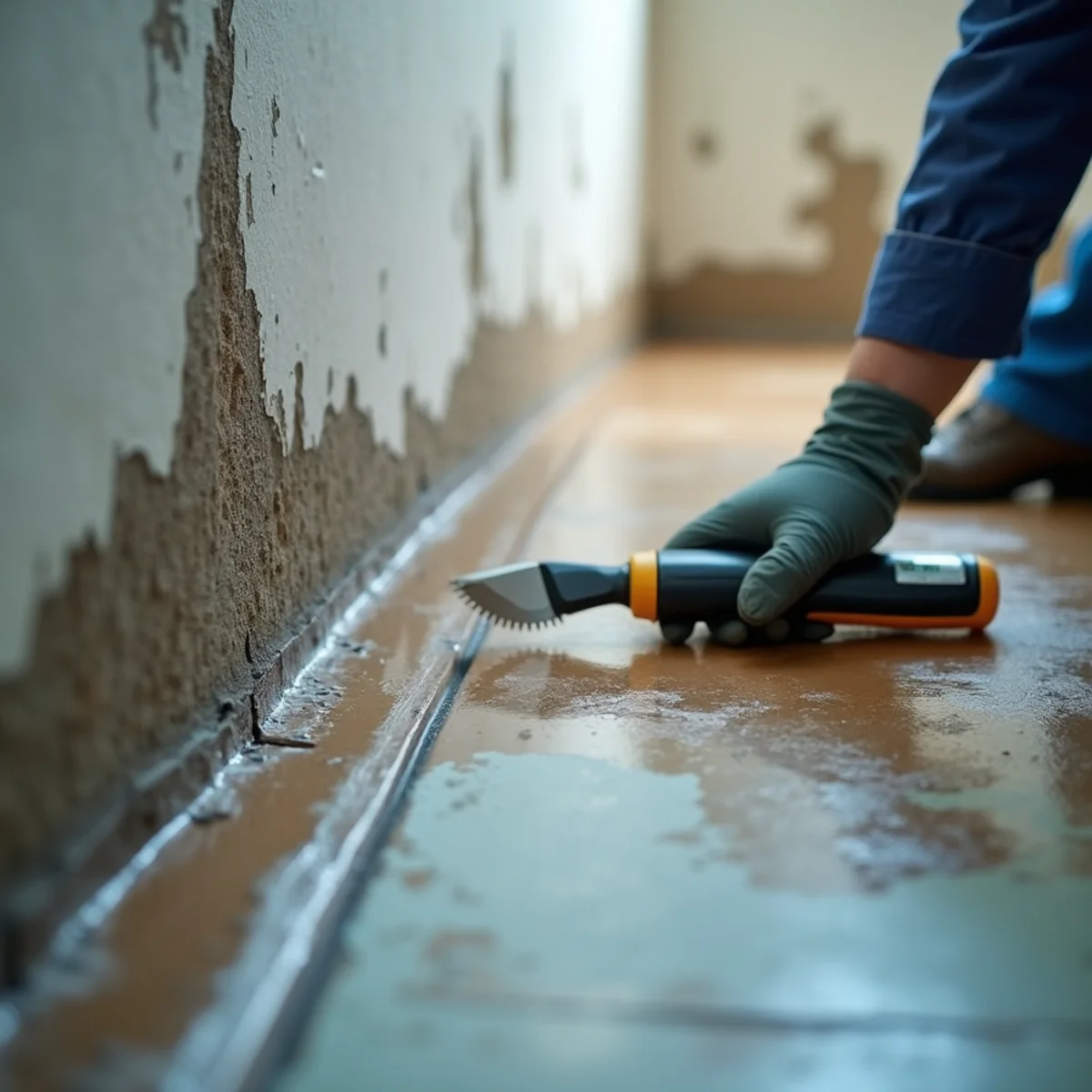
In those cases we perform a flood cut, removing the affected drywall to a set height above the water line, along with the wet insulation behind it. That opens the cavity so the framing can be dried and treated, then rebuilt clean.
- The water was Category 2 gray or Category 3 black and soaked the drywall
- The drywall stayed wet for several days before drying started
- Insulation behind the drywall is saturated and holding water
- Visible mold or a musty smell is coming from the wall
- The drywall is soft, crumbling, sagging, or bubbling
The Flood Cut, Explained
A flood cut is a straight, clean removal of the lower drywall, usually 12 to 24 inches above where the water reached. It sounds drastic, but it is precise. It removes exactly the compromised material and no more, and it gives the wall cavity a real chance to dry.
In many Rocklin homes, including the older single-story houses around Silverado Oaks, we see slab-level leaks that soak the bottom foot of drywall on several walls. A measured flood cut there is faster and cleaner than trying to dry contaminated, saturated board that will fail inspection anyway.
Once the framing is dry and treated, new drywall goes back in. You end up with a wall that is sound instead of one that looks fine and hides a problem.
What's Behind the Drywall Changes the Call
The decision is not only about the board you can see. Behind it sit insulation, wiring, and framing, and each affects whether the wall can be saved. Wet fiberglass batting loses its R-value and sags, and while it can sometimes be dried, it often gets replaced. Cellulose insulation clumps and holds water once it soaks through, so it almost always comes out with the drywall.
Electrical is the other reason not to rush a wet wall. Outlets and junction boxes low on a wall can sit right in the wet zone, so we check them before anything gets energized. In many 1990s Rocklin homes, insulation runs continuously through the wall cavities, which means water at the base of one stud bay usually means the neighboring bays are wet too. We pull a baseboard or drill a small inspection hole to see how far it traveled rather than guessing from the painted face.
Get an Honest Read on Your Walls
The wrong call in either direction costs you. Tear out savable drywall and you pay for a rebuild you did not need. Dry contaminated drywall in place and you trap a mold problem inside the wall.
We give you a straight answer backed by moisture readings and the water category, then we do the work either way. Call (201) 277-9344 and we will tell you exactly which of your walls can stay and which need to come out.
Need help right now in Rocklin? Our line is open 24/7.
(201) 277-9344Frequently asked
It can often be saved if the water was clean, the exposure was short, and we dry it before mold starts. Drywall soaked by contaminated water, or wet for several days, usually needs to come out. Moisture readings and the water category decide it.
Typically 12 to 24 inches above the water line. That removes the compromised board and wet insulation while leaving sound drywall in place, and it opens the wall cavity so the framing can be dried and treated before rebuild.
Mold usually starts on the back of the paper facing where you cannot see it, so we rely on moisture readings, how long the wall stayed wet, and any musty smell. When the signs point to growth, removal is safer than drying in place. Call (201) 277-9344 for an assessment.
Often, yes. Fiberglass batting can sometimes be dried if the exposure was short and the water was clean, but soaked cellulose insulation clumps and holds moisture, so it usually comes out. Reaching it means removing at least the lower drywall, which is one more reason a flood cut is sometimes the faster, cleaner call.
Not safely. Painting over a stain traps whatever moisture is still in the wall, the stain often bleeds back through, and mold can be growing on the paper backing you cannot see. We confirm the wall is dry to a measured standard first, then it is ready to prime and paint. Call (201) 277-9344 if you are unsure whether a wall is truly dry.
Related help from our team
Restoration Rocklin CA
IICRC-Certified Water Damage Restoration Team
We're a locally based, IICRC-certified water damage restoration team serving Rocklin and Placer County 24/7. Questions about your situation? Call (201) 277-9344.