
Storm flooding forces hard calls fast. What you keep and what you throw away depends less on how the item looks and more on whether it soaked up contaminated water.
Floodwater Changes the Rules on What You Keep
After a storm pushes water into your home, the sorting begins, and it is emotional. The instinct is to save everything that looks intact. With flood water, how an item looks is not the test. What it is made of is.
The dividing line is simple. Porous materials that soaked up floodwater usually have to go. Hard, non-porous surfaces can usually be cleaned, sanitized, and kept. That single distinction decides most of your pile.
It feels wasteful to throw out things that seem fine. But floodwater is not clean water, and porous items hold onto what it carried. Keeping them is a health risk, not a saving. The goal is not to strip your home bare. It is to draw the line in the right place, so you keep everything that is safe to keep and let go only of what cannot be made safe.
Why Floodwater Is Treated as Contaminated
Water that enters from outside during a storm is not the clean water from a broken supply line. It has run across ground, streets, and yards, and it often mixes with an overwhelmed drain or sewer. That makes it Category 3 black water, the most contaminated class. Even rain that looks clean picks up whatever it flows over on the way into the house, from driveway oil to fertilizer to whatever a storm drain was already carrying. That is why we do not judge floodwater by how it looks, and why the sorting rules stay strict.
Black water carries bacteria, chemicals, and whatever it picked up on the way in. Once a porous material absorbs it, that contamination is inside the material, not just on the surface. You cannot reliably scrub it out.
This is why our flood cleanup process treats storm water as contaminated until proven otherwise. It is not caution for its own sake. It is the reason certain items are safe to keep and others are not. The same logic applies to how far the water spread. Anything below the high-water line was in contact with contamination, even if it looks clean and dry now, so that line becomes the boundary for a lot of the sorting.
What Usually Has to Go
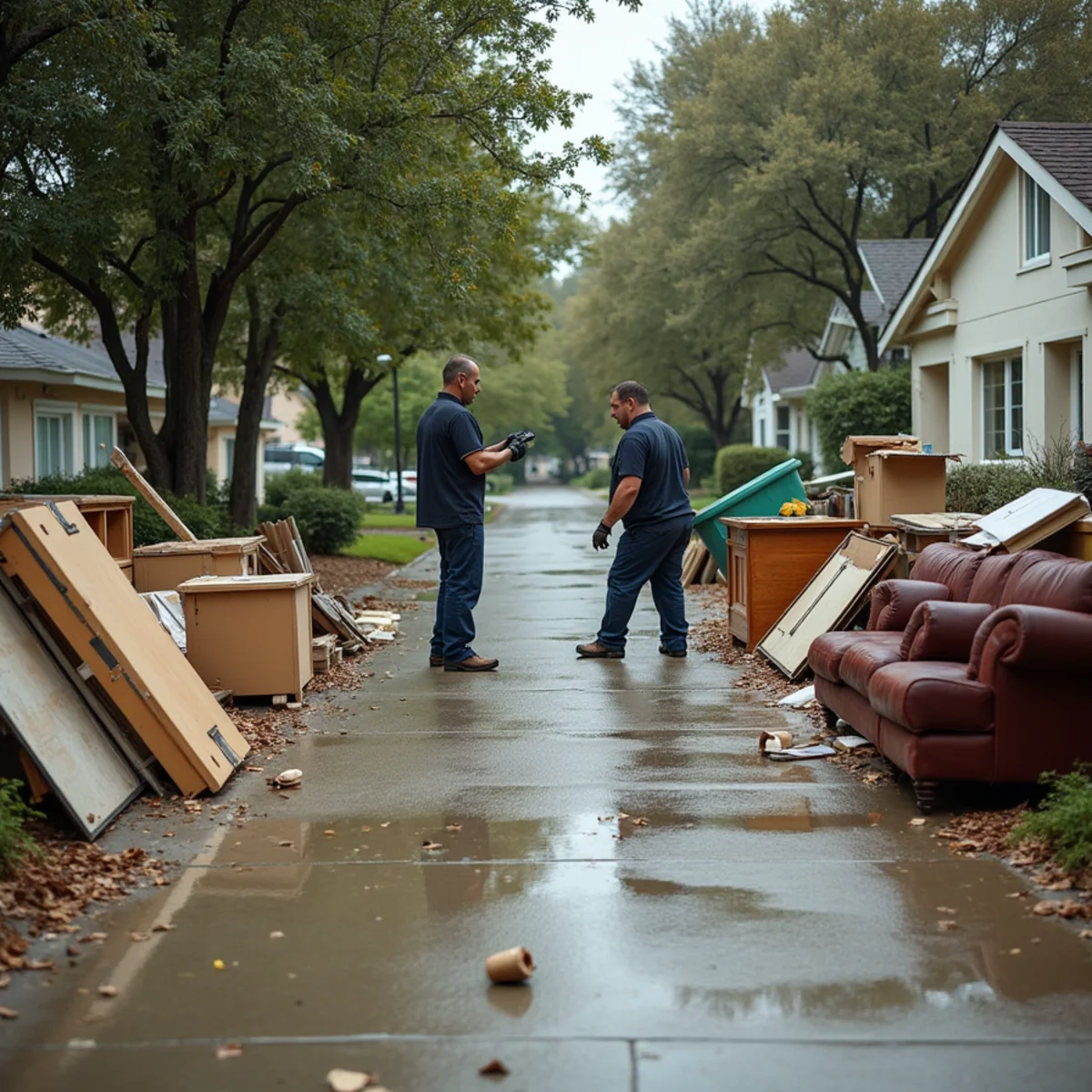
Porous and semi-porous materials absorb contaminated water and hold it, which puts them on the removal list. This is standard practice after a Category 3 flood, and it is what keeps your rebuilt home safe. Insurance adjusters expect this too, which is another reason careful documentation matters before anything leaves the house.
Documenting these items before disposal matters for your claim, so we photograph and itemize as we go rather than just hauling things out.
- Carpet padding, and often carpet, that sat in floodwater
- Drywall below the water line and the insulation behind it
- Upholstered furniture and mattresses that soaked through
- Particleboard and pressed-wood furniture that swelled
- Food, cosmetics, and medicine that contacted the water
- Baby items and stuffed toys that absorbed contaminated water
What Can Usually Be Saved
The keep pile is real too, and it is often larger than people fear. Non-porous materials do not absorb contamination into their structure, so they can be cleaned and disinfected back to safe.
The rule is whether the surface can be thoroughly sanitized. Hard surfaces can. That covers a lot of a home, from framing and subfloor that will be dried and treated to the everyday items in your kitchen and closets. Once cleaned and disinfected, these go back into service safely.
- Solid wood furniture, once cleaned, disinfected, and dried
- Metal, glass, and hard plastic items
- Dishes, cookware, and glassware after proper sanitizing
- Sealed tile and concrete surfaces
- Jewelry and other non-porous valuables
The Gray Areas
Some things are neither clearly keep nor clearly toss, and those deserve judgment rather than a rule. Photographs, documents, and irreplaceable items fall here. Sometimes they can be carefully cleaned or freeze-dried by a specialist. Sometimes the contamination and damage are too much.
We have helped homeowners across Rocklin and neighboring Folsom make these calls after winter storms drove water inside. When an item is irreplaceable, we slow down and look at whether specialized recovery is worth attempting before anything is discarded.
The point is that the keep-or-toss decision is not one-size-fits-all. The porous-versus-non-porous rule covers most of it, and honest judgment handles the rest. When something has more sentimental than monetary value, we tell you plainly what recovery would involve so you can decide, rather than making the call for you.
Photograph Everything Before It Goes to the Curb
The urge after a flood is to drag the ruined material outside fast. Resist it until the loss is documented. Adjusters pay claims on evidence, and a pile at the curb with no record is hard to reimburse. Before anything leaves the house, photograph the high-water line on the walls, the soaked materials in place, and each significant item with its make and model where you can read them.
A running inventory, what it was, its rough age, and its condition, is what turns a chaotic cleanup into a payable claim. We document as we sort, logging materials and moisture readings so your Placer County adjuster has what they need. If something has to be removed immediately for safety, keep a cut sample of the carpet or a photo of the label rather than tossing it unrecorded.
- Capture the water line on the walls before any drywall comes out
- Photograph appliances and electronics with model numbers visible
- Keep a short written inventory of what was removed and why
- Save a sample of any flooring or material discarded for safety
Let a Crew Sort It With You
You should not have to make these calls alone in the middle of a flooded house. We sort salvageable from unsalvageable as we work, document everything for your insurance, and handle the contaminated material safely.
Call (201) 277-9344 for 24/7 flood response across Rocklin and Placer County. We will help you keep what can be kept and safely remove what cannot.
Need help right now in Rocklin? Our line is open 24/7.
(201) 277-9344Frequently asked
Generally, porous items that soaked up floodwater: carpet pad, drywall below the water line, wet insulation, upholstered furniture, mattresses, and any food, cosmetics, or medicine that contacted the water. Floodwater is contaminated, and these materials hold that contamination even after they look dry.
Solid wood, metal, glass, and hard plastic furniture can usually be cleaned, disinfected, and kept because they are non-porous. Upholstered and pressed-wood pieces that absorbed contaminated water typically cannot be safely saved. We sort these with you and document everything for your claim.
Usually not. Standard homeowners policies typically exclude flooding that enters from outside, which is covered by separate flood insurance. We document the loss correctly and help you understand which coverage applies. Call (201) 277-9344 and we will guide you through it.
Right away. Floodwater is contaminated, and mold can begin to grow on damp material within 24 to 48 hours, so every hour it sits raises both the health risk and the cost. Documenting the loss is important, but it does not have to slow down mitigation. We run 24/7 flood response across Rocklin, so call (201) 277-9344 and we will start while you sort out the rest.
Be careful. Treat the water as contaminated, keep children and pets out, and do not touch electrical panels or devices in wet areas until power to those circuits is off. Watch for sagging ceilings and buckled floors, which can signal structural problems. When in doubt, wait for a crew with the right protective gear to clear the area first.
Related help from our team
Restoration Rocklin CA
IICRC-Certified Water Damage Restoration Team
We're a locally based, IICRC-certified water damage restoration team serving Rocklin and Placer County 24/7. Questions about your situation? Call (201) 277-9344.