
Most homes reach dry standard in three to five days, but bathrooms, basements, and hardwood each run on their own clock. Here is a realistic room-by-room timeline and what changes it.
Most Homes Dry in 3 to 5 Days — but It Depends
The honest answer to how long drying takes is three to five days for most residential water losses. That range holds for a typical leak caught reasonably fast and dried with commercial equipment. It is a real number, not a sales pitch.
But an average hides the details that matter to you. A wet bathroom and a flooded basement do not dry on the same schedule. Neither does a carpeted bedroom and a hardwood floor. The material, the saturation, and the airflow all move the timeline. Where the water came from matters too. A clean supply-line leak caught within an hour dries faster than a gray-water overflow that soaked in overnight, because the second one often means removing saturated material before drying can even begin.
The one thing that never changes is how we decide when drying is done. It is finished when the moisture readings hit the dry standard for each material, not when a set number of days has passed.
What the Drying Clock Actually Measures
Drying is not about time. It is about moisture content. Every material has a target level it needs to return to, and we measure toward that target with meters, checking daily and logging the numbers.
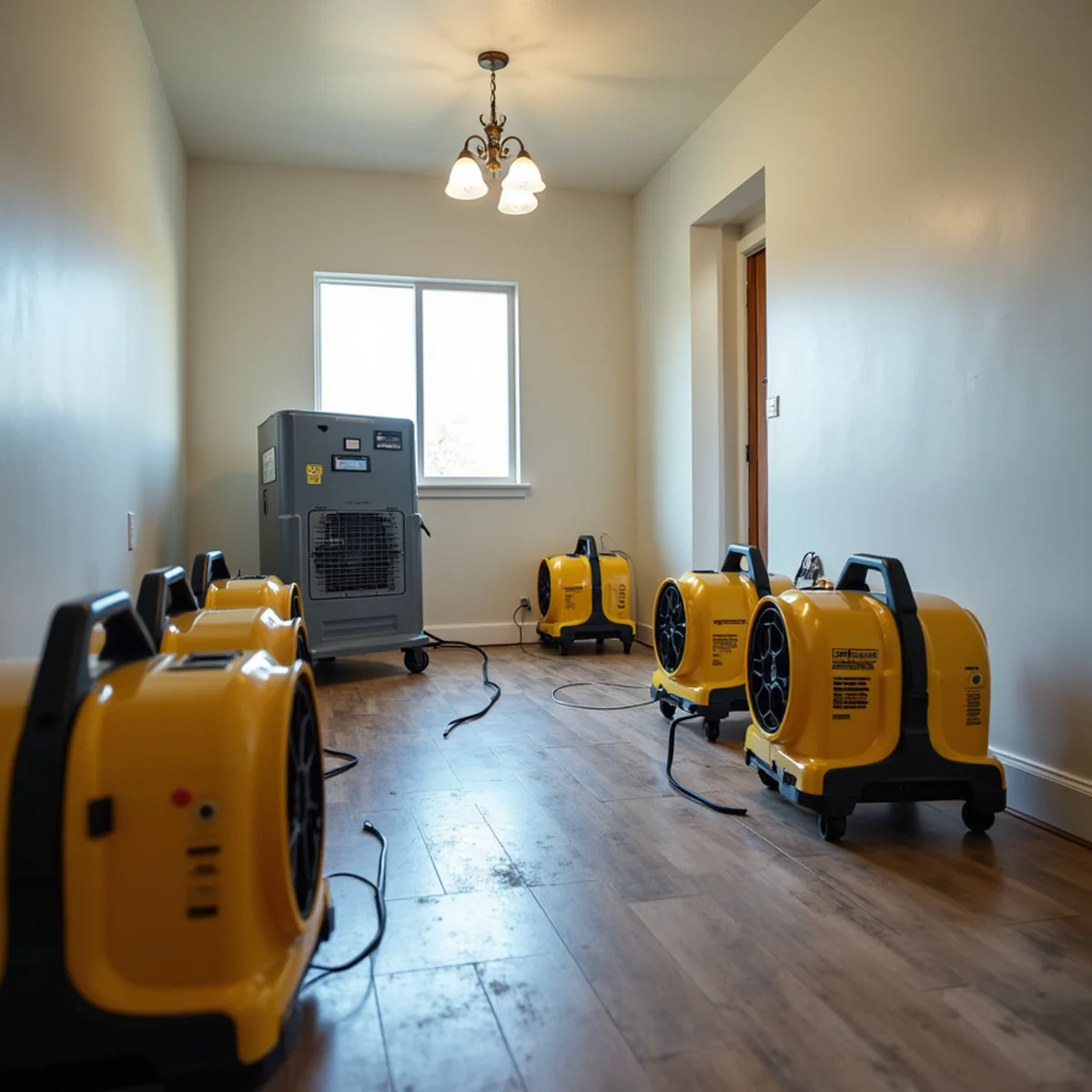
The process is a cycle. Air movers sweep high-velocity air across wet surfaces to speed evaporation, and dehumidifiers pull that released moisture out of the air so it does not just resettle somewhere else. Evaporate, capture, remove, repeat.
Our structural drying and dehumidification approach is built around that cycle, which is why we can give you a range up front and then adjust as the readings come in. The equipment stays until the materials are dry, not a day less.
A Room-by-Room Timeline
Different rooms carry different materials and different amounts of trapped water, so they finish on different days. These are realistic ranges we see in the field, assuming drying starts promptly after extraction.
Rooms with more porous material and less airflow sit at the longer end. Small, hard-surfaced rooms caught early sit at the shorter end.
- Bathroom, tile and hard surfaces: often 2 to 3 days once water is extracted
- Kitchen with cabinetry: 3 to 4 days, since water hides under and behind cabinets
- Carpeted bedroom or living room: 3 to 5 days, depending on pad and subfloor
- Finished basement: 4 to 7 days, because of volume and limited airflow
- Hardwood flooring: 7 to 14 days or more, since wood releases water slowly
What Makes Drying Take Longer
When drying runs long, there is almost always a reason, and it is usually about how much water there was, how long it sat, or how hard it is to reach.
Hardwood is the classic example. Wood gives up water slowly and can cup or buckle if it is dried too fast, so it demands patience and specialty equipment. Water that soaked into wall cavities or under cabinets adds days for the same reason: airflow struggles to reach it. High outdoor humidity during a wet Rocklin winter slows things further, because the air itself is harder to keep dry enough to pull moisture out of the structure.
Delay is the other big factor. Water that sat for a day or more before extraction has traveled farther and soaked deeper, so there is simply more to remove. This is why a fast first call shortens the entire job.
How We Know When It's Actually Dry
We verify dryness before we pull equipment. Each day we take moisture readings across the affected materials, document them for your insurer, and reposition air movers as the numbers drop. When every material reaches its dry standard, drying is complete.
This matters for homes across Rocklin and nearby communities like Auburn, where a mix of housing ages means the same leak can behave differently in a 1980s home than a newer build. We dry to the readings, not to a calendar, so nothing stays wet behind a wall that looked finished. That daily discipline also catches surprises early, like a pocket of moisture under a cabinet that is drying slower than the rest of the room, so we can add equipment there instead of discovering it after the walls go back up.
You get the proof too. The daily log shows the moisture coming down to standard, which is what protects you from a musty surprise weeks later and what your adjuster wants to see.
What Living Through the Drying Days Is Actually Like
The equipment that dries a home is loud, and it runs around the clock. Commercial air movers push a lot of air and dehumidifiers hum constantly, and the single most common homeowner mistake is switching them off at night for quiet. That resets the drying cycle every time, because the moisture the machines pulled from the air resettles into the structure by morning. Keep them running, and keep windows and exterior doors closed, since open windows on a damp Rocklin winter day feed humidity right back in.
Expect some heat, too. Dehumidifiers exhaust warm air, so a sealed room being dried often runs several degrees warmer than the rest of the house. That is normal and part of how the science works. We size the number of air movers to the square footage and the dehumidifier to the room's volume, so a cluster of equipment in one room is deliberate, not overkill.
- Leave the equipment running 24/7, even overnight, until we remove it
- Keep windows and exterior doors closed so the dehumidifiers can work
- Expect noise, a warmer room, and power cords across the floor
- Do not unplug or reposition units to make room, it slows the whole job
Get a Realistic Timeline for Your Home
Every drying job is a little different, but you deserve a real estimate instead of a shrug. After we assess the loss, we can tell you which rooms will dry fast and which will need patience.
Call (201) 277-9344 and we will map the moisture, set the equipment, and give you a timeline you can plan around, then hold to it with daily readings.
Need help right now in Rocklin? Our line is open 24/7.
(201) 277-9344Frequently asked
Most residential losses reach dry standard in three to five days. Bathrooms can dry in two to three, while basements and hardwood floors often need a week or more. We monitor moisture daily and only remove equipment once readings confirm the materials are dry.
Fans move surface air but cannot pull moisture from wall cavities, framing, or subfloor, and opening windows on a humid day makes it worse. Commercial dehumidifiers capture and remove that moisture, which is what actually shortens the timeline and prevents mold.
Wood releases water slowly and can cup or buckle if dried too fast, so it needs specialty equipment and more time, often 7 to 14 days. Rushing it risks permanent damage. Call (201) 277-9344 and we will dry it at the pace the wood can handle.
No. Air movers and dehumidifiers work as a continuous cycle, and shutting them off lets moisture resettle into the structure overnight, which sets the timeline back a day each time. It is loud, but leaving it running is what keeps you on schedule. If the noise is a real problem, call (201) 277-9344 and we will talk through options.
Usually, yes, though you will be living with noise, warmer rooms, and cords across the floor for a few days. The main exceptions are contaminated losses or jobs with extensive material removal, where relocating for part of the work is safer and easier. We will tell you honestly which situation you are in when we set the equipment.
Related help from our team
Restoration Rocklin CA
IICRC-Certified Water Damage Restoration Team
We're a locally based, IICRC-certified water damage restoration team serving Rocklin and Placer County 24/7. Questions about your situation? Call (201) 277-9344.