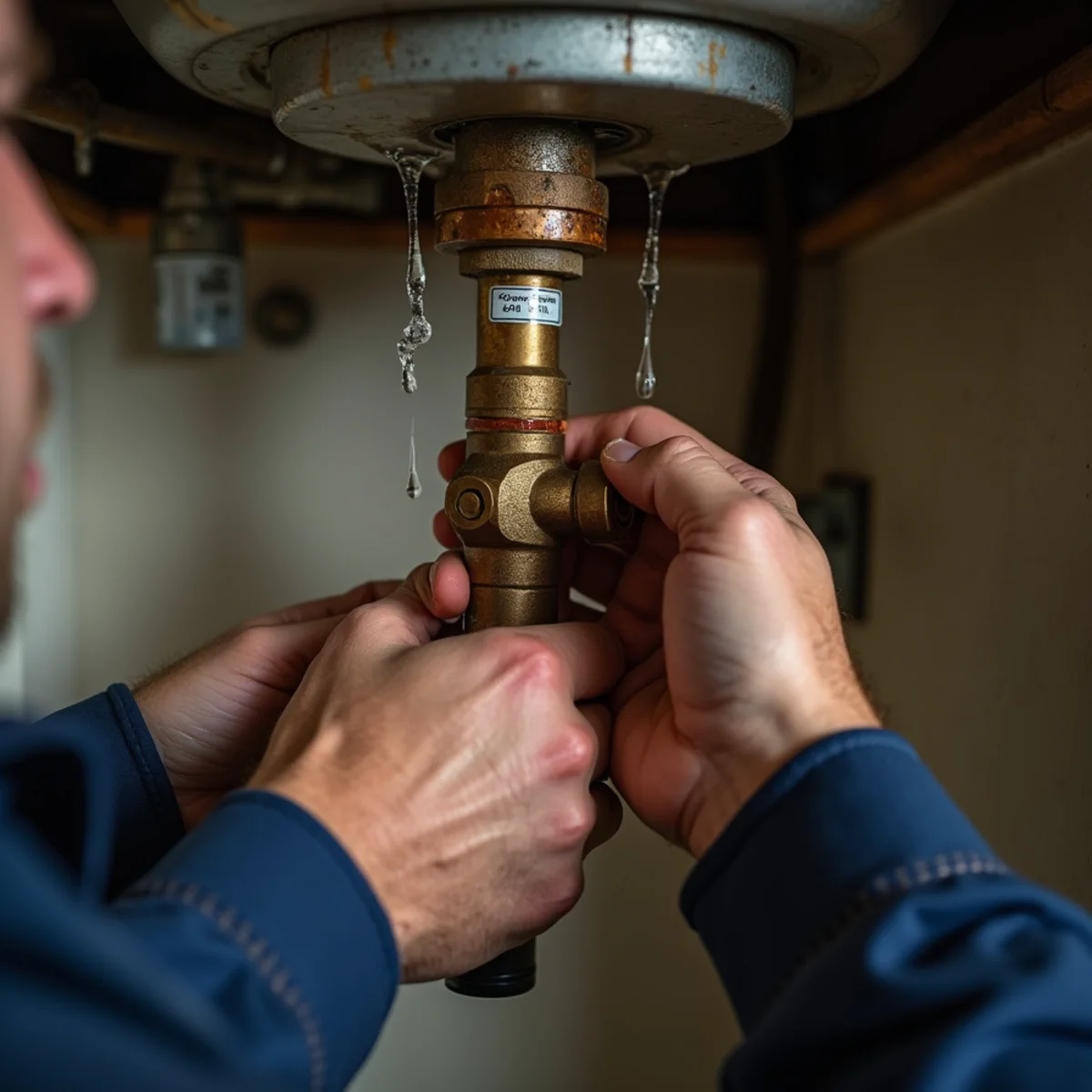

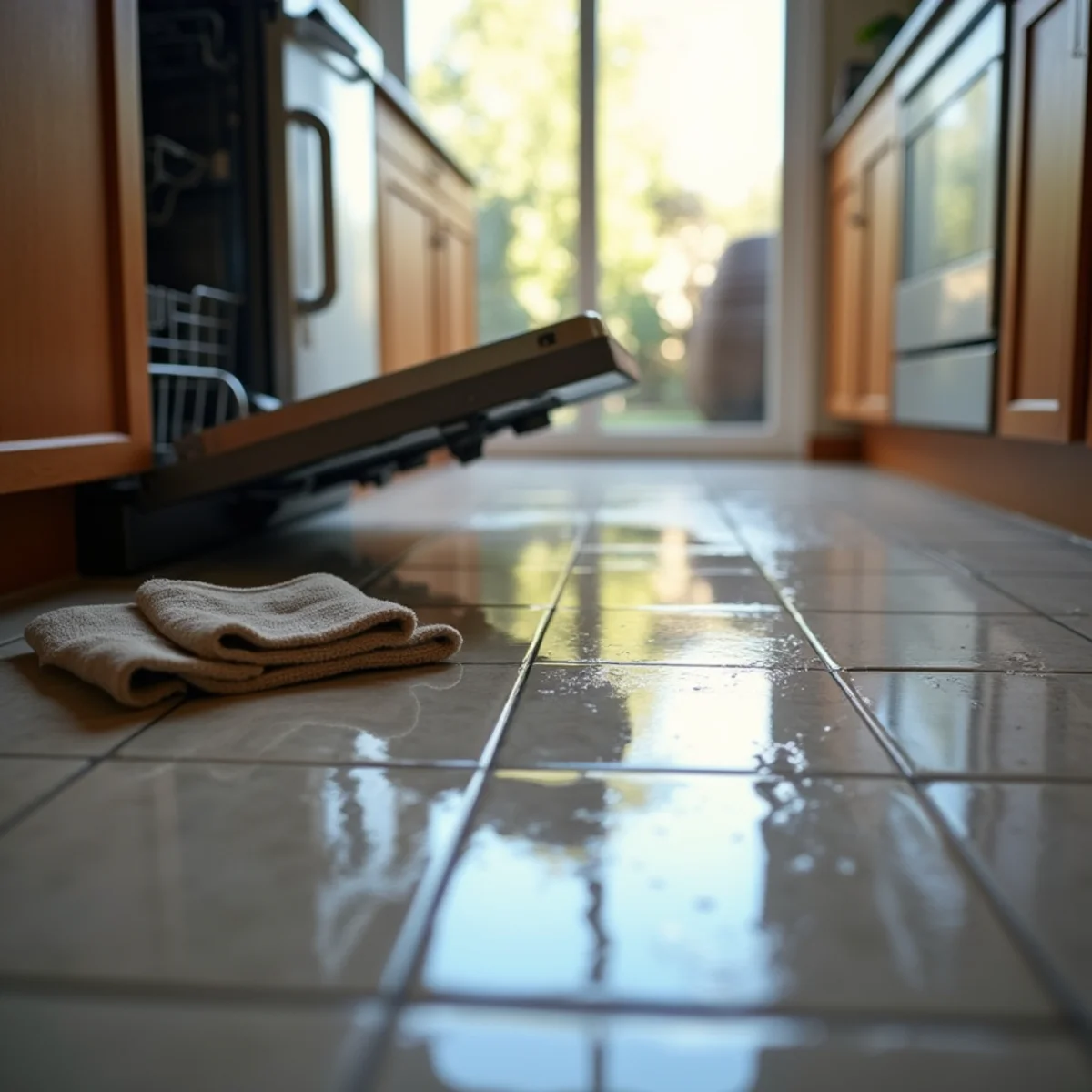
Waking up to a flooded kitchen from a dishwasher leak is a bad morning. Here is what to do now to stop the water and save your cabinets and floor.
The Overnight Leak Problem
A dishwasher that leaks overnight has hours to work. By the time you find it in the morning, the water has spread across the kitchen, slipped under the cabinets, and soaked into the subfloor and the base of the cabinet boxes. What looks like a wet floor is usually a much deeper problem.
The instinct is to grab towels and call it handled. But the water under the cabinet toe-kicks and behind the dishwasher is what causes the real damage, and towels never reach it. Kitchens are one of the hardest rooms to dry properly because of everything the water can hide under. A dishwasher leak also tends to run slow and steady, so it saturates rather than splashes — the water has all night to soak into the cabinet bases and creep along the subfloor. By morning the surface can look almost dry while the materials underneath are still holding water you cannot see or feel.
Here is what to do now to stop the source and limit the loss. When the water is off, call (201) 277-9344 for fast water extraction across Rocklin.
Stop the Water and the Power
Find the dishwasher shutoff valve first. It is usually under the kitchen sink, on the hot-water line running to the dishwasher — turn it clockwise to close it. If you cannot find it or it is stuck, shut the home's main water valve.
Then cut power to the dishwasher at the breaker. Do not reach for a plug or switch while standing in water. A dishwasher is a wired appliance sitting in a puddle, so isolate it at the panel before you do anything else near it.
With the water and power off, the emergency is contained and you can assess how far it spread.
- Close the dishwasher supply valve under the sink
- Cannot find it? Shut the home's main water valve
- Turn off the dishwasher breaker before touching it
- Do not run the dishwasher again until it is inspected
Protect the Cabinets and Subfloor
Kitchen cabinets sit on the floor, and their particleboard or plywood bases wick water fast. Once soaked, cabinet boxes swell, delaminate, and warp — and they are expensive to replace. Getting water away from them quickly is the priority.
Open the cabinets and remove everything from the lower shelves. Pull items off the floor of the pantry and the sink base. Sop up standing water, then get air moving. But understand that surface drying does not reach the water trapped under the cabinet toe-kick and beneath the flooring.
In Rocklin Ranch and similar neighborhoods, kitchens often sit over a slab, so water pools and spreads sideways rather than draining away. That makes fast, thorough extraction under the cabinets essential to save them.
Why Kitchens Hide Water
Water from a dishwasher leak travels three places you cannot easily see: under the cabinet boxes, under the flooring, and into the wall behind the dishwasher. Each of these holds moisture long after the visible floor feels dry.
This hidden moisture is what feeds mold within 24 to 48 hours and what causes cabinets to fail weeks later. It is also why a kitchen leak that seems minor can turn into a cabinet-and-floor replacement if it is not dried properly.
We use moisture meters and thermal imaging to find every pocket of trapped water, then place equipment to dry the cabinet cavities and subfloor — not just the tile you can see. That is the difference between saving your kitchen and rebuilding it.
Watch the Room Below and the Flooring Type
Where the kitchen sits changes the risk. If your kitchen is upstairs or over a finished room, an overnight leak drips through to the ceiling below, and you can wake up to damage on two levels. Check the ceiling under the kitchen for staining, sagging, or drips before you assume the loss is contained to one floor.
Flooring type matters too. Water slips between the seams of laminate and engineered wood and swells the planks from underneath, often ruining them. Sheet vinyl can trap water against the subfloor. Tile usually survives, but the water still travels through the grout and under the tile to the subfloor.
None of these tell you they are wet from the surface. That is why we check the subfloor and the room below directly, rather than trusting a floor that feels dry underfoot. The goal is to find every place the overnight water reached before it has a day or two to grow mold.
Why Do Dishwashers Leak — and How to Prevent the Next One
A dishwasher leak usually traces to one of a few worn parts. The rubber door gasket hardens and cracks with age and lets water seep out the front. The supply line or the drain hose can crack or loosen at a fitting. A clogged filter or drain hose backs water up until it overflows. And using regular dish soap instead of dishwasher detergent creates suds that push water past the seals.
Prevention is mostly a matter of a few minutes now and then. Wipe and inspect the door gasket, look under the sink at the supply line for cracks or bulges, and clean the filter so the machine drains freely. On an older unit, swapping a tired rubber supply line for a braided stainless steel one is cheap insurance. A simple leak sensor or a drip tray under the dishwasher will catch the next slow leak long before it soaks your cabinets overnight.
- A hardened or torn door gasket seeping at the front
- A cracked or loose supply line or drain hose
- A clogged filter or drain backing water up
- The wrong detergent creating suds that escape the seals
Get Help Now
A sudden dishwasher failure is a covered loss under most homeowners policies, and fast action decides whether your cabinets and flooring survive. Extraction and proper drying in the first day protect the most expensive parts of the room.
The mistake that turns a covered claim into an out-of-pocket loss is deciding it is dry when it is not. Cabinets that look fine can be quietly delaminating from within, and a floor that feels dry can sit on a soaked subfloor. A quick moisture check settles it either way.
We provide rapid water extraction and structural drying across Rocklin, with a 60-minute response and full insurance documentation. Call (201) 277-9344 the moment you find the leak. We will pull the hidden water out, dry the cabinets and subfloor to standard, and keep a bad morning from becoming a kitchen remodel.
Need help right now in Rocklin? Our line is open 24/7.
(201) 277-9344Frequently asked
Close the dishwasher supply valve under the sink, or the home's main valve, then cut the dishwasher breaker before touching anything near the water. Once it is off, call (201) 277-9344 for extraction before the water damages your cabinets and subfloor.
Often yes, if the water is extracted quickly and the cabinet cavities are dried properly. Left wet, particleboard and plywood bases swell and delaminate. Fast professional drying under the cabinets gives them the best chance.
Mopping handles the surface, but dishwasher water travels under cabinets, under flooring, and into the wall behind the unit. That trapped moisture feeds mold within 24 to 48 hours and warps cabinets. Professional drying reaches what towels cannot.
Common culprits are a worn door gasket, a cracked or loose supply or drain hose, a clogged filter that backed water up, or the wrong detergent creating suds. A slow overnight leak saturates the cabinet bases and subfloor while you sleep, which is why the surface can look nearly dry by morning.
Not until it is inspected. Water may have reached the pump, valve, or electrical components, and running it again can worsen the leak or create a shock hazard. Have the cause found and fixed first. Call (201) 277-9344 for extraction and drying while you arrange the appliance repair.
Related help from our team
Restoration Rocklin CA
IICRC-Certified Water Damage Restoration Team
We're a locally based, IICRC-certified water damage restoration team serving Rocklin and Placer County 24/7. Questions about your situation? Call (201) 277-9344.