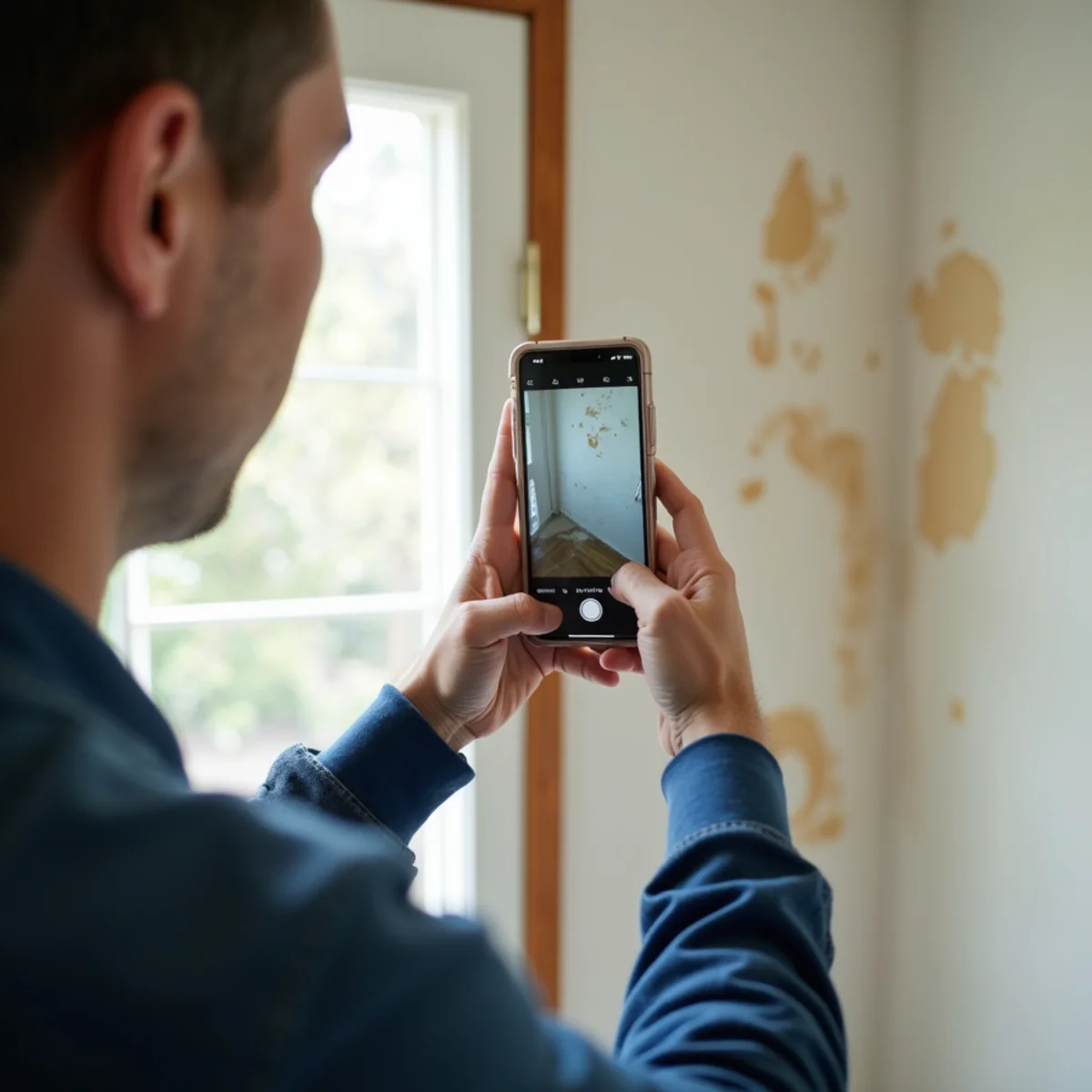

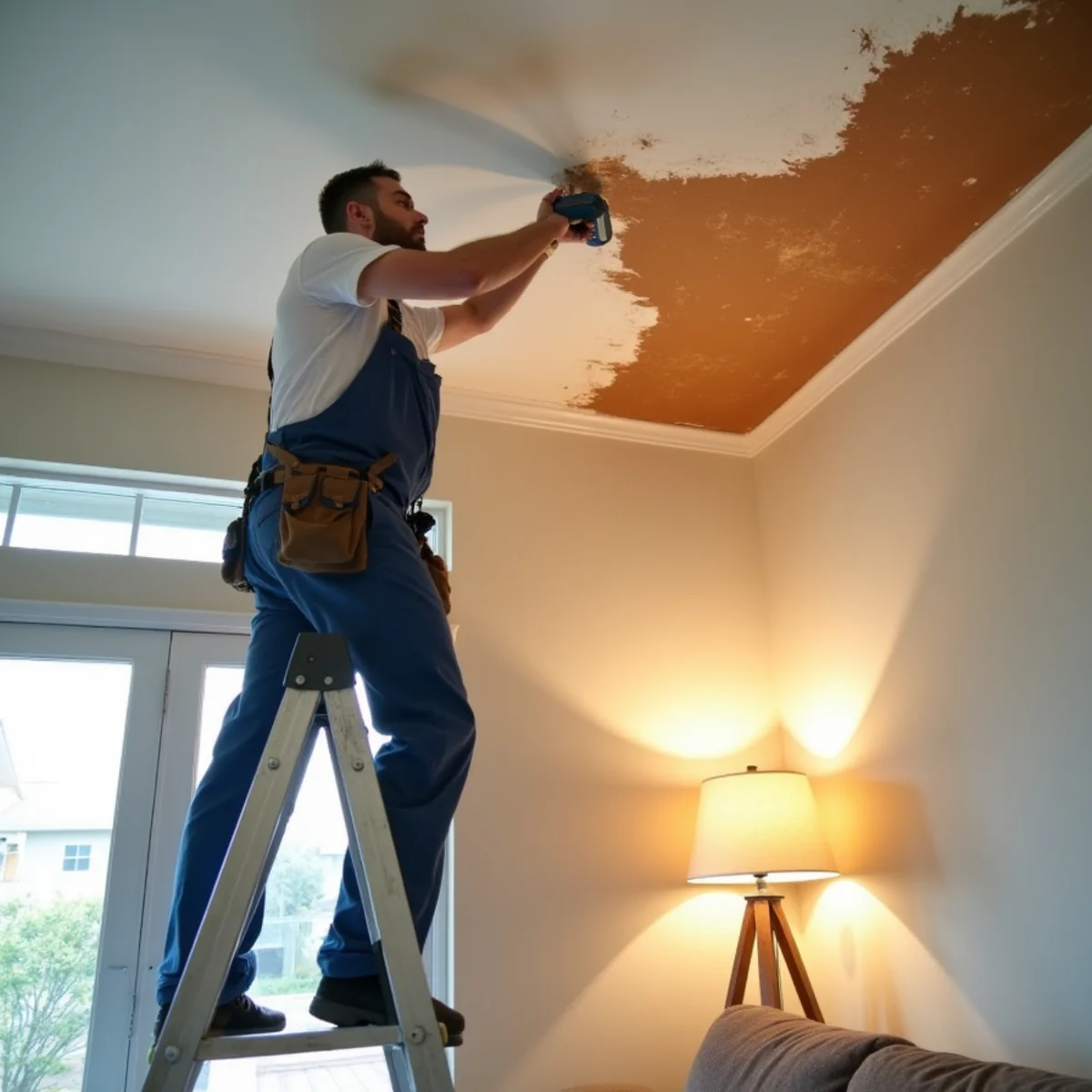
A brown ring on the ceiling is never just a cosmetic problem. It is the visible end of a leak that has already soaked the drywall, the insulation above it, and often the framing — and by the time the stain shows, water has been traveling for a while. Painting over it does nothing, because the water is still coming and the material behind the paint is still wet.
We fix ceiling water damage the right way: find and stop the leak first, dry out the cavity above, then repair the drywall, texture, and paint so it matches the rest of the room. A sagging ceiling especially is a call to make now, not later. Call (201) 277-9344 and we will get to your Rocklin home fast.
Signs of ceiling water damage
- A brown, yellow, or rust-colored stain or ring on the ceiling
- A ceiling area that sags, bulges, or feels soft and heavy
- Paint that is bubbling, cracking, or peeling overhead
- Active dripping from the ceiling or a light fixture during rain
- A musty smell concentrated near the top of a room
- Nail heads or seams showing through, or texture flaking off
What our ceiling water damage repair service includes
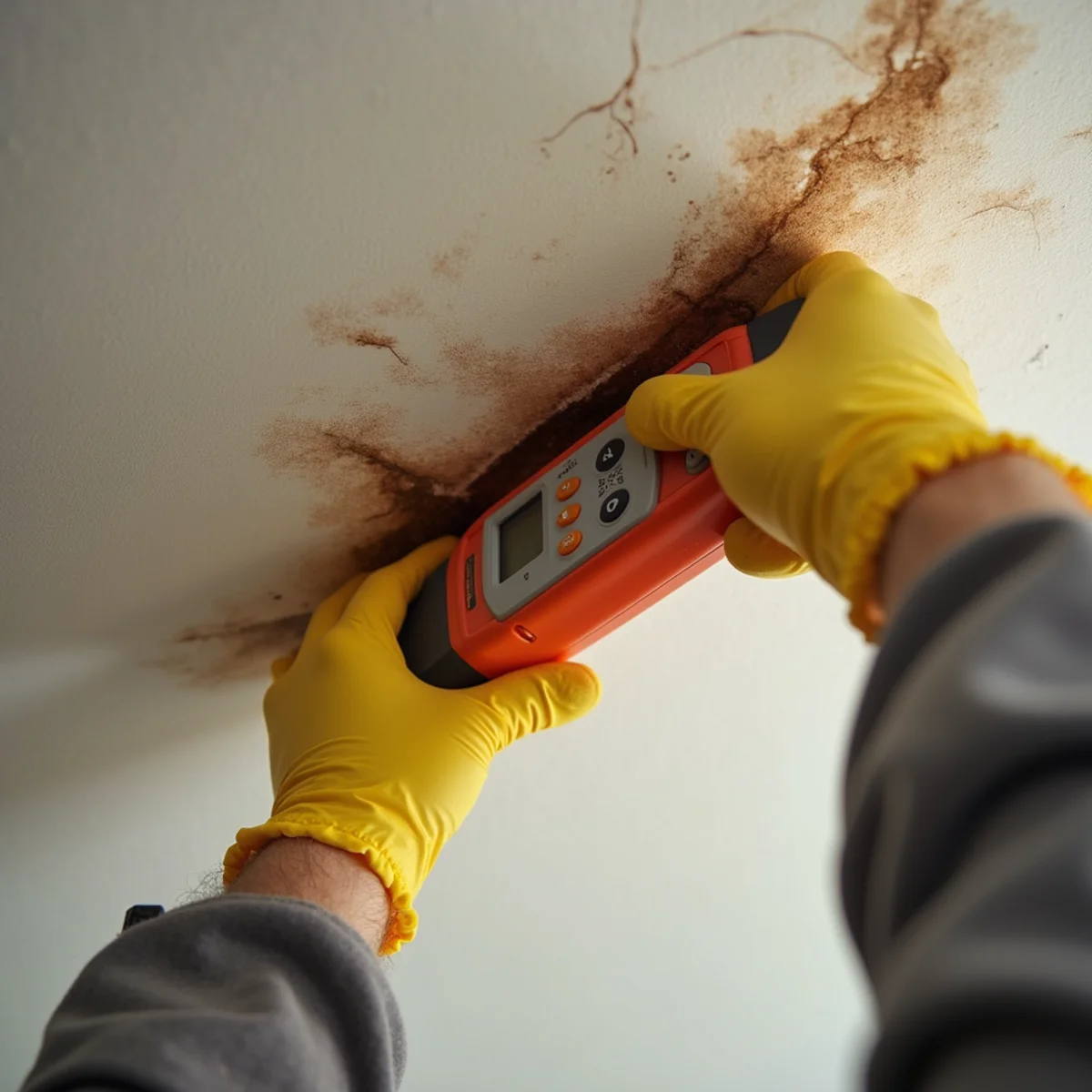
- The leak source traced with thermal imaging and moisture meters, then stopped
- Trapped water in a sagging ceiling relieved safely and compromised drywall removed
- Insulation and framing in the cavity dried to standard, wet insulation replaced
- New drywall hung and finished where the ceiling came out
- The stain sealed with a stain-blocking primer so it cannot bleed through
- Existing texture matched, whether knockdown, orange peel, or popcorn
- Paint blended into the surrounding ceiling so the patch disappears
- The cause and damage documented and billed to your insurance
Need help right now in Rocklin? Our line is open 24/7.
(201) 277-9344The stain is a symptom — find the source first
A ceiling stain almost never sits directly below its cause. Water enters at a high point, runs along the top of the drywall or down a framing member, and drips out wherever it finds a low spot or a seam. So the leak might be a roof penetration several feet away, a supply line in the floor above, a failed shower pan, or a wax-ring leak under an upstairs toilet. Repair the drywall without finding that source and the stain simply comes back.
We trace it before we touch the ceiling. Thermal imaging shows the temperature signature of moisture spreading through the ceiling, and moisture meters tell us how far it has traveled. In a two-story Rocklin home, an upstairs bathroom or laundry directly above a stained ceiling is a frequent culprit; in a single-story, the roof, an attic HVAC line, or a plumbing vent is usually where we look.
A sagging ceiling is an urgent safety issue
A flat stain is one thing. A ceiling that sags or bulges is holding a pocket of water, and wet drywall is heavy — a saturated section can let go without warning and come down all at once. If that is what you are seeing, keep people out of the room, move what you can from beneath it, and do not poke at it. This is the situation where responding quickly protects both your home and whoever is under it.
When we arrive at a sagging ceiling, we relieve the trapped water in a controlled way, remove the compromised drywall, and dry the cavity above before rebuilding. Trying to save a bulging, waterlogged ceiling almost never works and is not worth the risk — the safe move is to take out the failed section and restore it properly.
Drying the cavity, then matching the finish
The space above a ceiling — the insulation, the framing, the back side of the drywall — holds moisture you cannot see from below. If we only patched the visible damage, that trapped water would grow mold in the cavity and stain through the new paint. So we open what we need to, dry the insulation and framing to standard, replace insulation that stayed wet, and confirm the cavity is dry before it gets closed back up.
Then comes the part homeowners actually notice: making it look like nothing happened. Rocklin homes are full of textured ceilings — knockdown, orange peel, and the popcorn common in older builds — and a good repair means matching that texture and blending the paint so there is no patch outline. We hang and finish the drywall, match the texture, prime the stain so it cannot bleed through, and paint.
Our ceiling water damage repair process
- 1
Find & stop the leak
We use thermal imaging and moisture meters to trace the water back to its source — roof, plumbing, or the floor above — and make sure it is stopped before any repair.
- 2
Make it safe
For a sagging or bulging ceiling, we relieve trapped water in a controlled way and remove compromised drywall so nothing collapses unexpectedly.
- 3
Dry the cavity
We dry the insulation, framing, and back of the ceiling to standard, replacing insulation that stayed saturated so no moisture is sealed inside.
- 4
Rebuild the ceiling
We hang and finish new drywall where needed and prime the affected area with a stain-blocking sealer so the old stain cannot bleed through.
- 5
Match texture & paint
We match the existing ceiling texture — knockdown, orange peel, or popcorn — and blend the paint so the repair disappears into the rest of the room.
What affects ceiling water damage repair cost
A small stained patch from a one-time leak is a modest repair. A sagging ceiling fed by an ongoing leak, with wet insulation and framing above, is a bigger one. What drives the cost:
- Finding and stopping the leak source — roof, plumbing, or the floor above
- How large the damaged ceiling area is and whether it must be removed
- Wet insulation and framing above that need drying or replacement
- Matching the existing texture and paint for a seamless finish
- Ceiling height and access to the space above
- Any mold that formed in the cavity before the leak was found
Why choose Restoration Rocklin CA for ceiling water damage repair
A stained or sagging ceiling is a leak that has already soaked the drywall, insulation, and framing above it — painting over it solves nothing. We find and stop the source first, dry the cavity above, then rebuild the drywall and match the texture and paint so the repair disappears. A local Rocklin crew handles all of it, from the hidden leak to the finished ceiling.
- We respond 24/7 within 60 minutes — a sagging, water-filled ceiling is a safety call we treat as urgent.
- IICRC-certified, licensed, and insured, we trace the source with thermal imaging before touching the ceiling so the stain does not come back.
- We dry the insulation and framing in the cavity to standard and verify the moisture before we close it up.
- We match knockdown, orange peel, or popcorn texture and blend the paint so the patch is invisible.
- Locally owned in Rocklin, we document the loss and bill your insurance directly for the covered repair.
Ceiling Water Damage Repair across Rocklin & Placer County
We provide ceiling water damage repair to homes and businesses throughout Rocklin — across ZIP codes 95765 and 95677 — and the surrounding Placer and Sacramento County communities, usually within 60 minutes of your call. Wherever you are in the area, a local crew and the right equipment are close by.
Ceiling Water Damage Repair — questions & answers
Not if you want it to stay gone. A stain means water reached the drywall, and painting over it without stopping the leak and drying the cavity leaves wet material and often mold behind the paint — the stain bleeds back through within weeks. We find the source, dry the area, seal it with a stain-blocking primer, and then paint so it does not return.
Keep everyone out from under it and move furniture clear, because saturated drywall is heavy and can collapse without warning. Do not try to drain it yourself. Call (201) 277-9344 and we will respond quickly to relieve the water safely, remove the failed section, dry the cavity, and rebuild it.
We identify the existing finish — knockdown, orange peel, or the popcorn found in many older Rocklin homes — and reproduce it on the repaired area, then blend the paint into the surrounding ceiling. Done right, the patch is invisible and the ceiling looks the way it did before the leak.
A ceiling stain almost never sits directly under its cause — water enters high and travels along framing before it drips. We use thermal imaging and moisture meters to trace it back to the roof, a plumbing line, or the floor above, and confirm the source is stopped before any repair. Call (201) 277-9344 and we will locate it.
If the leak was sudden and accidental — a burst pipe above, a storm-driven roof leak, an overflow upstairs — most homeowners policies cover the resulting ceiling damage. A slow leak neglected over time is treated as maintenance and often excluded. We document the cause and the damage so the right coverage applies and can bill your carrier directly.